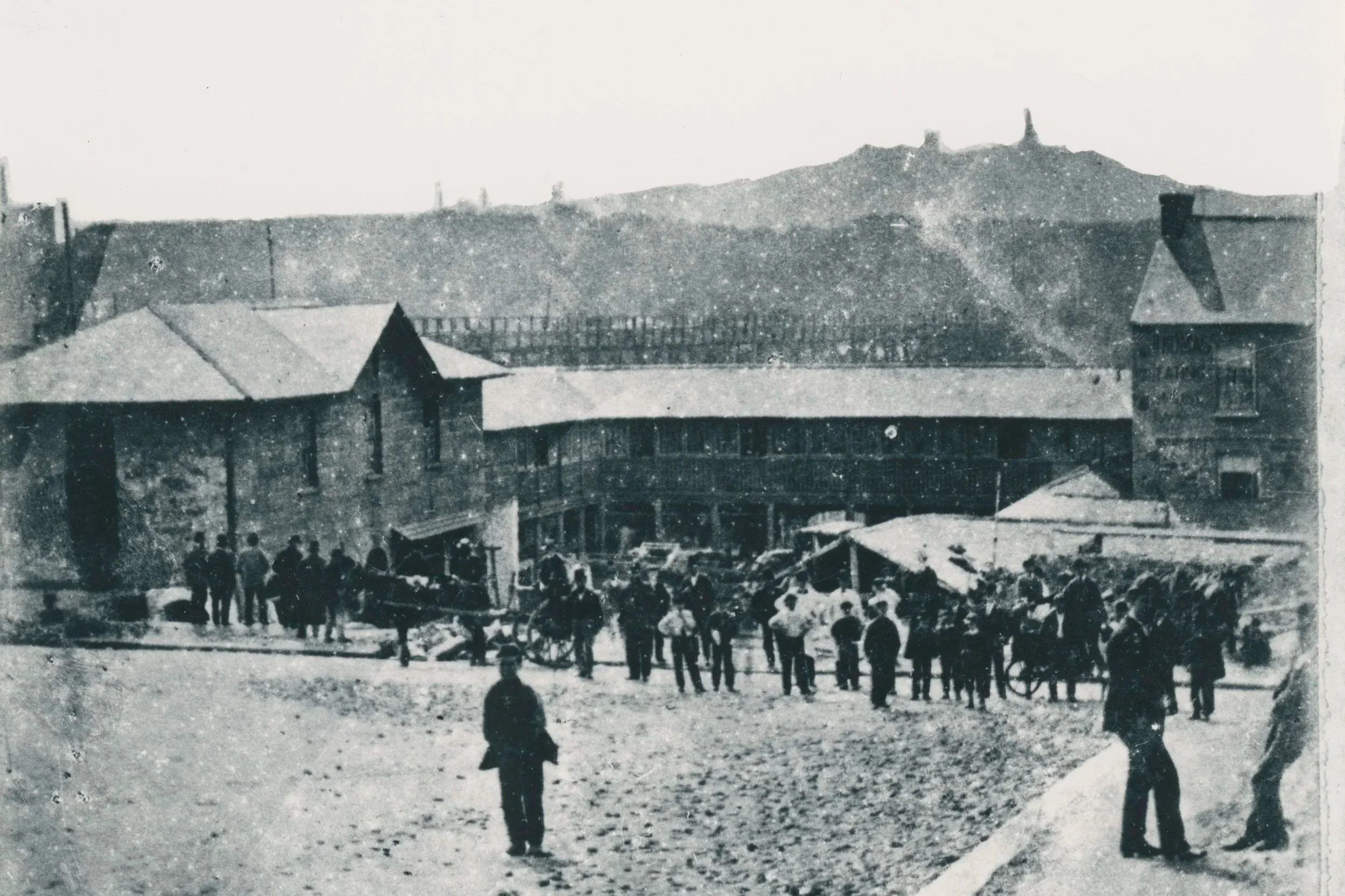
From the collections at Kresen Kernow AD2815-B-109c
Heritage
The Buttermarket site is a cluster of Grade II listed market and mining buildings - including the historic Buttermarket, Auction House, Mining Exchange and Wheal Peevor Purser’s Office - which together tell the story of Redruth’s rise as a global mining powerhouse and market town.
Explore the full timeline below to discover how the Buttermarket evolved alongside the town.
'Oh, ye who never knew the joys, try it! Remember Redruth Market, there you can have all in perfection and in no town in the kingdom is there greater abundance or quality'
Thomas Buller, 1778
The early settlement of Redruth was centred around Churchtown, where St Euny Church stands today. Nestled between Carn Brea and Buller Hill, the area provided excellent access to the shallow east-west lodes of tin and copper that would shape the town's future.
For centuries, Redruth remained a local market town. During the eighteenth century, however, demand for copper surged as Britain's Industrial Revolution gathered pace. Surrounded by rich mineral deposits, Redruth rapidly expanded into one of the largest and wealthiest mining centres in Britain. Its population grew dramatically and the town earned an international reputation as the metalliferous mining capital of the world.
The Buttermarket stood at the heart of this prosperity. Built in 1825 as part of a wider programme of civic improvements, it became a focal point for trade, commerce and daily life. Farmers, butchers, traders, miners and merchants all passed through its courtyards and market halls, creating a bustling centre of activity that reflected Redruth's growing importance.
As the town prospered, the market complex expanded. During the 1880s, the construction of the Mining Exchange and Wheal Peevor Purser's Office enclosed the eastern side of the courtyard, strengthening the Buttermarket's role as both a commercial centre and a symbol of Redruth's mining success.
Today, these buildings provide a rare surviving record of the industries, businesses and communities that helped shape modern Cornwall.
The Buildings
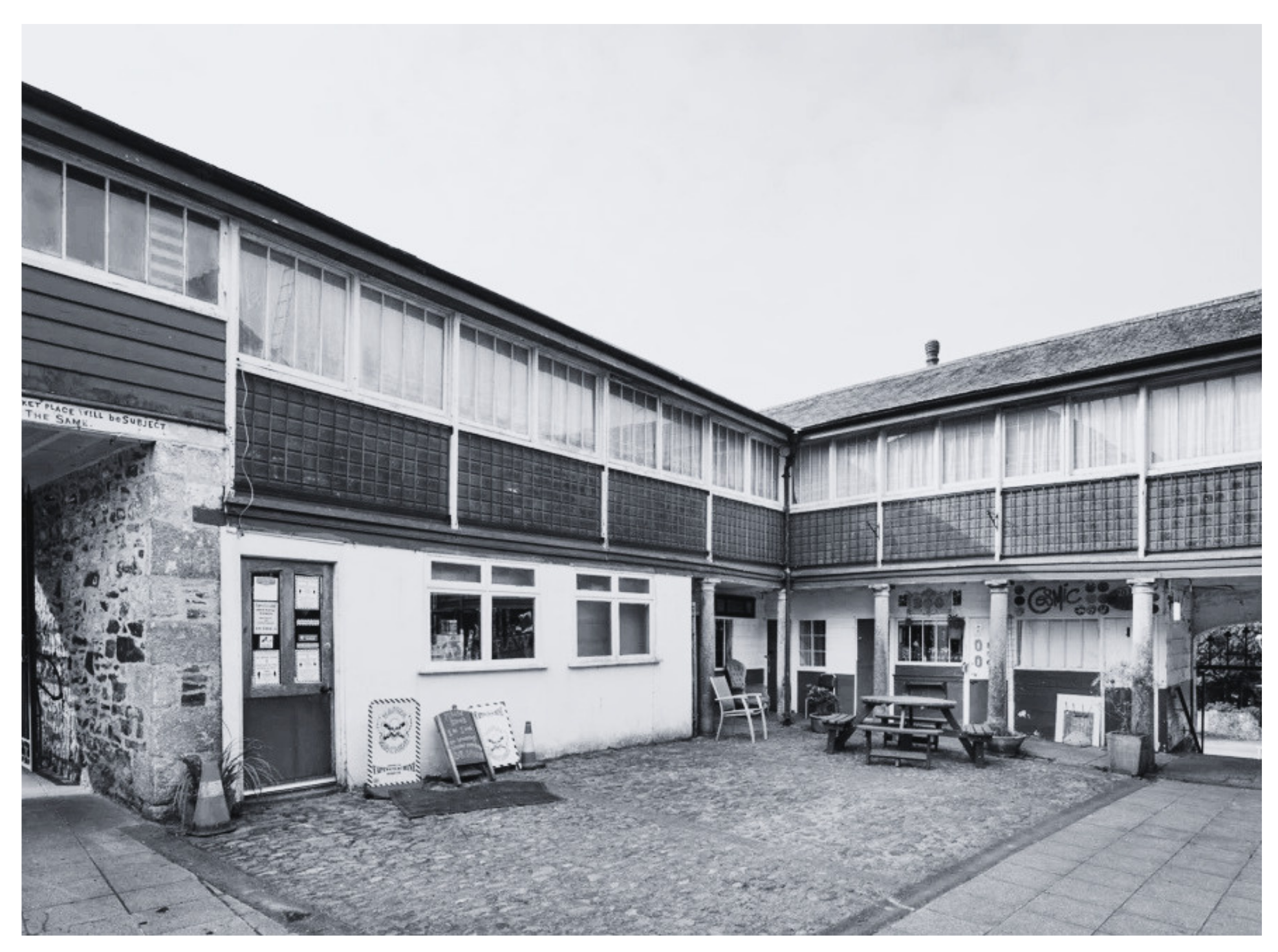
© Historic England
The Buttermarket
The Buttermarket forms the historic heart of the site at the rear, including the courtyard. It was built from 1825 onwards as part of a wider programme of improvements designed to support Redruth's growing population and booming mining economy. Over time, the market adapted to changing demands, hosting the sale of butter, eggs, cheese, poultry, pork and other produce brought to town from across West Cornwall.
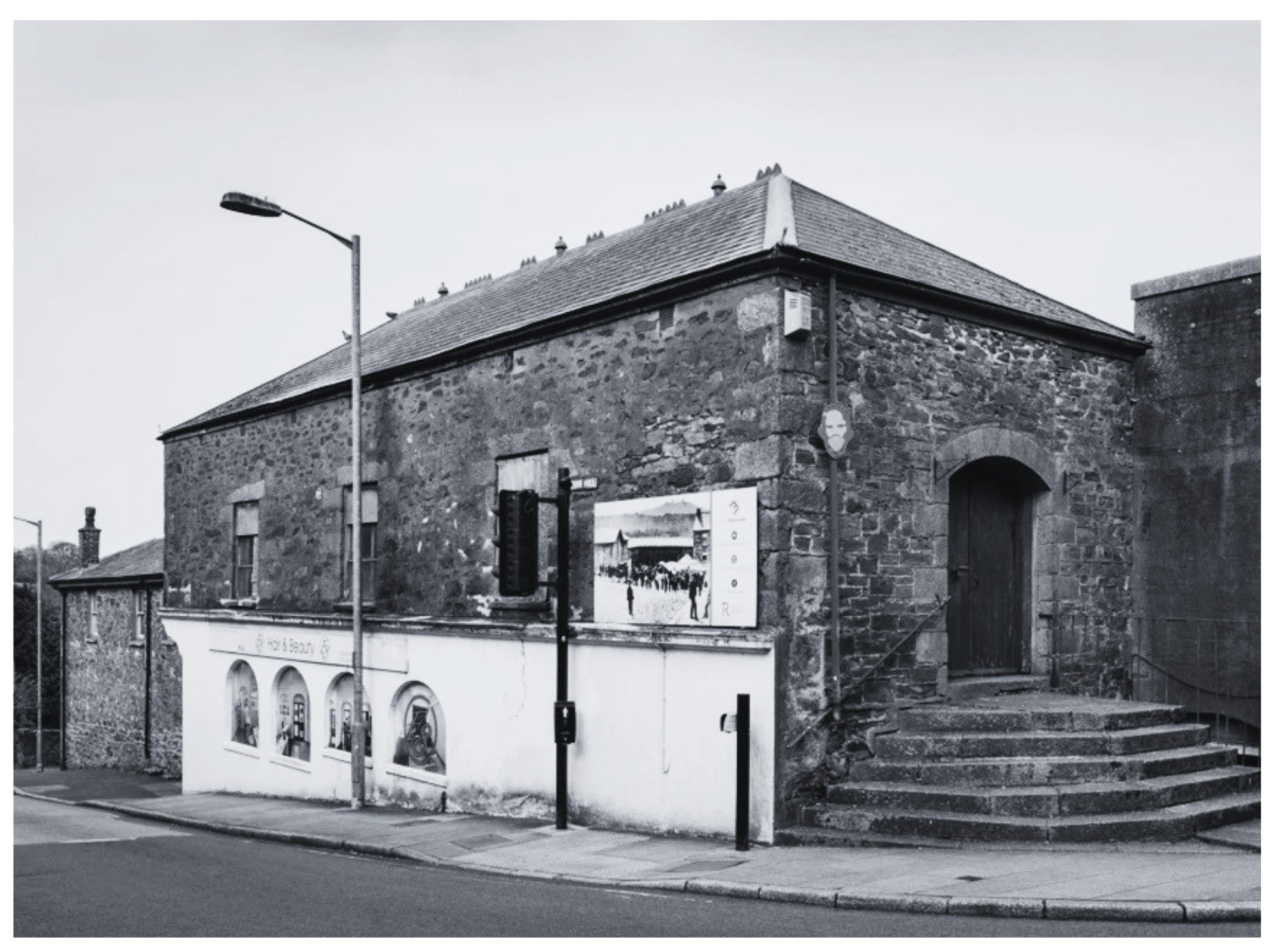
© Historic England
Auction House
Originally forming part of the wider market complex, the Auction House provided flexible space for trading, sales and commercial activity, including auctions and P.R. Earles & Co. Printing Works. Its simple but functional design reflected the practical needs of a busy market town.
Today, the restored building continues that tradition by providing a gallery space for exhibitions and events within the Buttermarket courtyard.
© Historic England
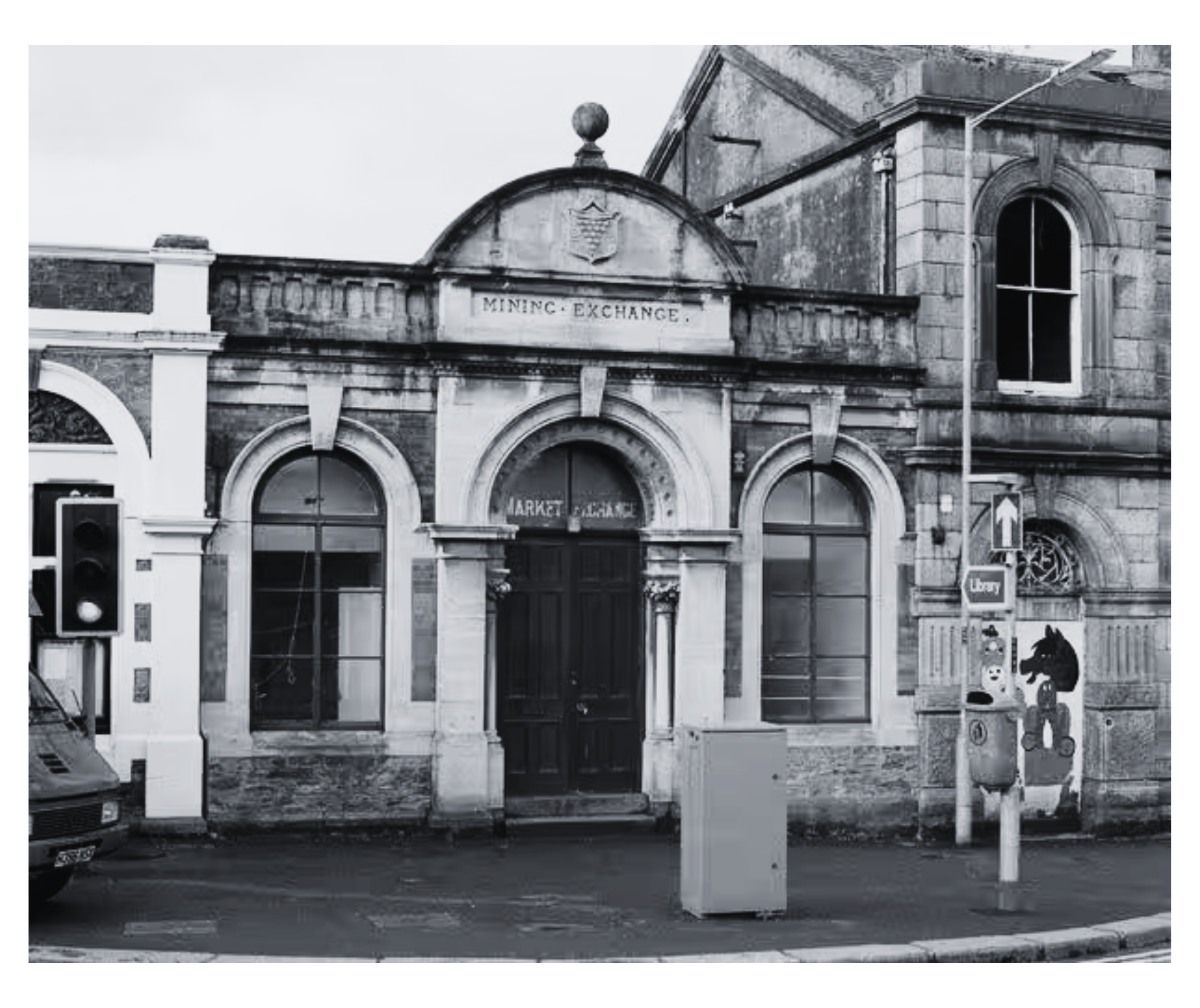
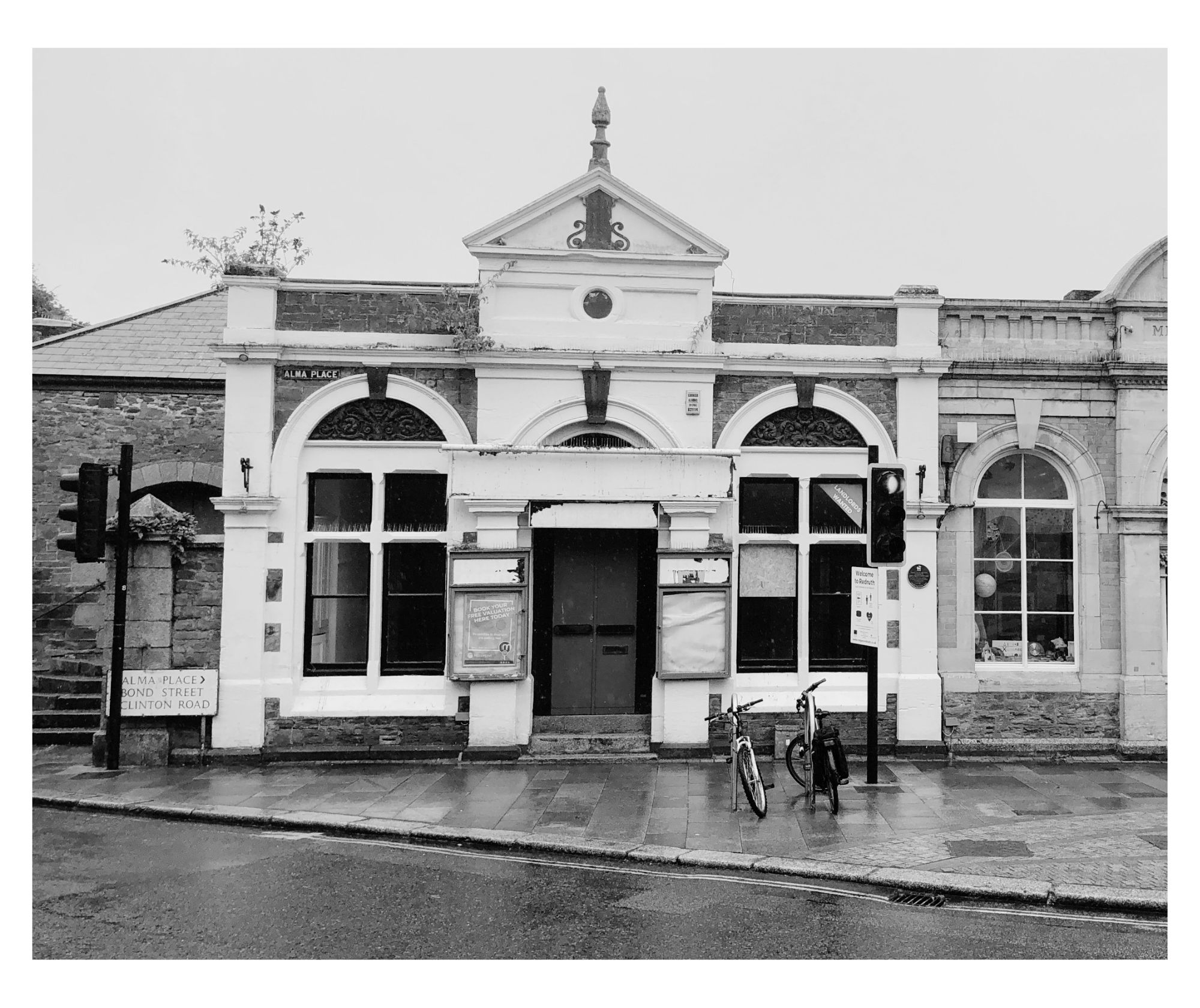
The Mining Exchange
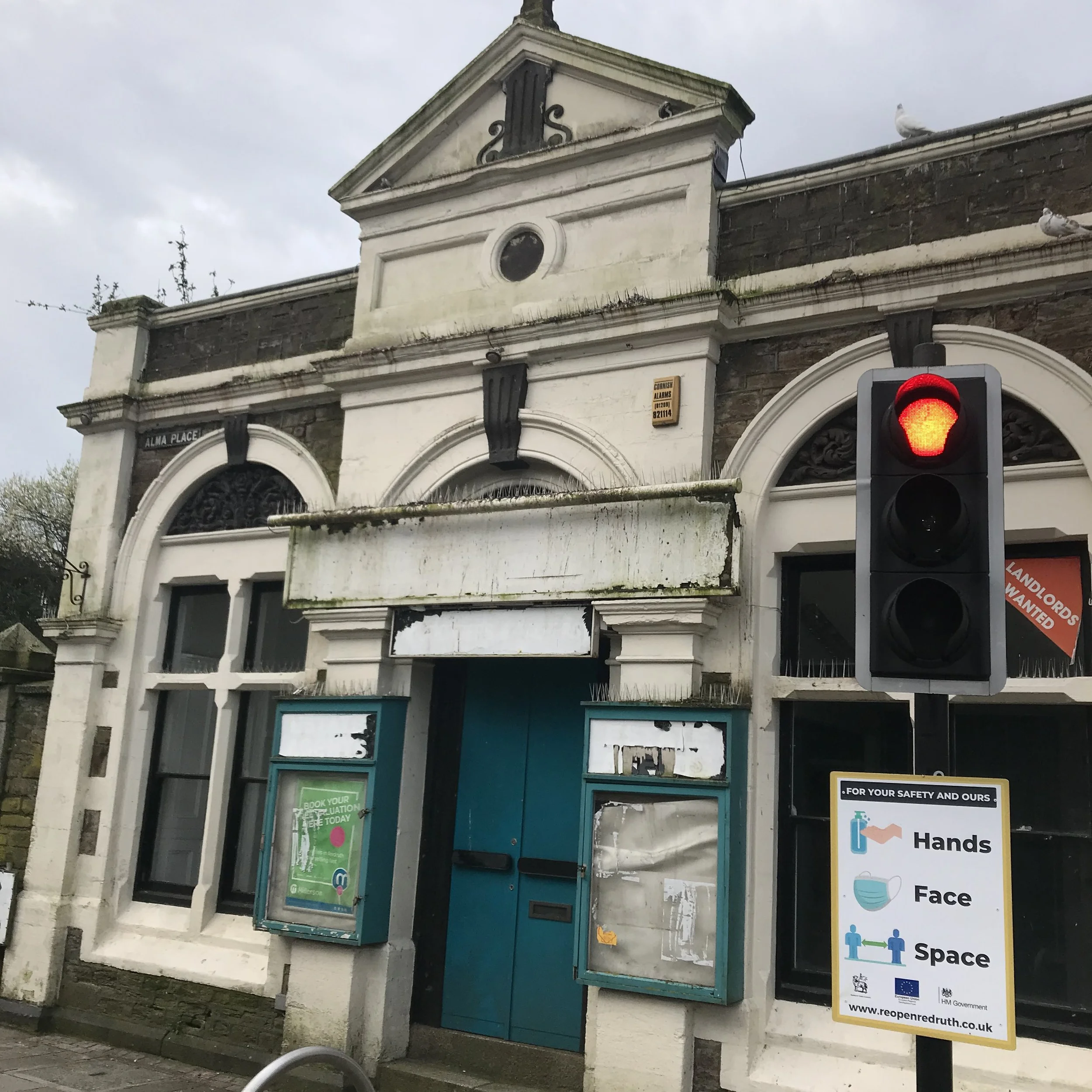
Constructed in 1880 and designed by renowned local architect James Hicks, the Mining Exchange represented the confidence and prosperity of Cornwall's mining industry during the late nineteenth century.
Here, investors and mine owners could meet to discuss ventures, trade shares and conduct business linked to the region's globally significant mining sector. The building served as a physical connection between Redruth's mines and the wider financial networks that supported them.
Its impressive façade on Alma Place remains one of the Buttermarket's most distinctive architectural features.
© Historic England
Wheal Peevor Purser's Office
Built around 1883, the Wheal Peevor Purser's Office served one of the district's successful mining operations.
A purser was responsible for the financial administration of a mine, managing wages, accounts and shareholder records. Although modest in scale, the building reflects the professionalism and commercial organisation that underpinned Cornwall's mining industry.
Together with the Mining Exchange, it illustrates the close relationship between the Buttermarket and Redruth's mining economy.
Click on each historic timeline square to find out more
Timeline
The historical information on this website has been researched and compiled by our volunteers using archival records, historic newspapers, maps and Kresen Kernow resources. While every effort has been made to ensure accuracy, local history is not always clear-cut, and new information continues to emerge. If you can add to the story or offer an alternative perspective, we'd love to hear from you.
Further heritage reports include :
Historic England report on the Buttermarket, Redruth
Historic England report on the Commercial Buildings of Redruth
12th Century
Redruth was a small settlement by the 12th century, centred around a ford and parish church. The town's name comes from the Cornish words 'Res' (ford) and 'Rudh' (red), thought to refer to the local stream, which was stained red by iron oxide deposits associated with the area's mineral-rich geology.
At this time, Redruth formed part of the Manor of Tehidy, recorded as 'Tendintone' in the Domesday Book. Ownership of the manor later passed to the Basset family, who would play a significant role in the town's development for centuries to come.
14th Century
The earliest known records of Redruth as a market town date from 28 July 1333, when King Edward III granted William Basset a charter to hold a market and fair in Redruth.
William Basset, born in 1300, inherited the Tehidy estate at just four years old and later became High Sheriff of Cornwall. The charter established Redruth's market, which was held twice weekly on Tuesdays and Saturdays, helping lay the foundations for the town's growth as an important centre of trade and commerce.
The Basset family would remain closely connected to Redruth and Cornwall's mining industry for generations. Their legacy can still be seen today in the 90-foot Basset Monument on Carn Brea, erected in 1836 in memory of Francis Basset, one of Cornwall's most influential mine owners and philanthropists.
1564
Elizabeth I grants Redruth a market charter. A market charter is a document that establishes a market and is granted by a royal charter. They can also prohibit other markets forming within a certain distance of the agreed location.
Redruth received market charters from Edward III, Elizabeth I and Charles II between the 14th and 17th centuries, reflecting the town's growing importance as a centre of trade and commerce in Cornwall.
1664
A grant for a market and fair was issued by Charles II. This appears to have been prompted by a petition in 1660 by John Basset (1624-1661) to move the market days from Tuesday and Saturday to Tuesday and Friday, responding to the needs of those on lower wages, such as common labourers and miners.
1778
“Oh, ye who never knew the joys, try it! Remember Redruth Market, there you can have all in perfection and in no town in the kingdom is there greater abundance or quality.”
- Diary of Thomas Buller, a businessman of London, who stayed at the London Hotel in the town.
Thomas Buller stayed at the London Inn on Fore Street, then a popular coaching inn on the main route between London and Penzance.
Travelling the 300 miles from London would have taken around two to three days by horse and carriage, with regular stops to change horses along the route. Coach travel remained the primary means of long-distance transport until the arrival of the railways, which finally connected Redruth to London in 1859.
1795
By 1791, Redruth Market was described as "by far the largest in Cornwall", stretching from the Town Clock along Fore Street. At the time, the market was centred around a timber-framed Market House in Middle Row, a thatched building that had occupied the site since at least the medieval period.
As Redruth grew, the Market House became an obstacle to the increasing number of carts and carriages travelling through the town. In 1795, Middle Row was demolished and the market moved to its present site, where the Buttermarket and Fair Meadow would become the centre of trade. For generations, both covered and open market spaces supported the sale of livestock, produce and goods, attracting buyers and sellers from across Cornwall.
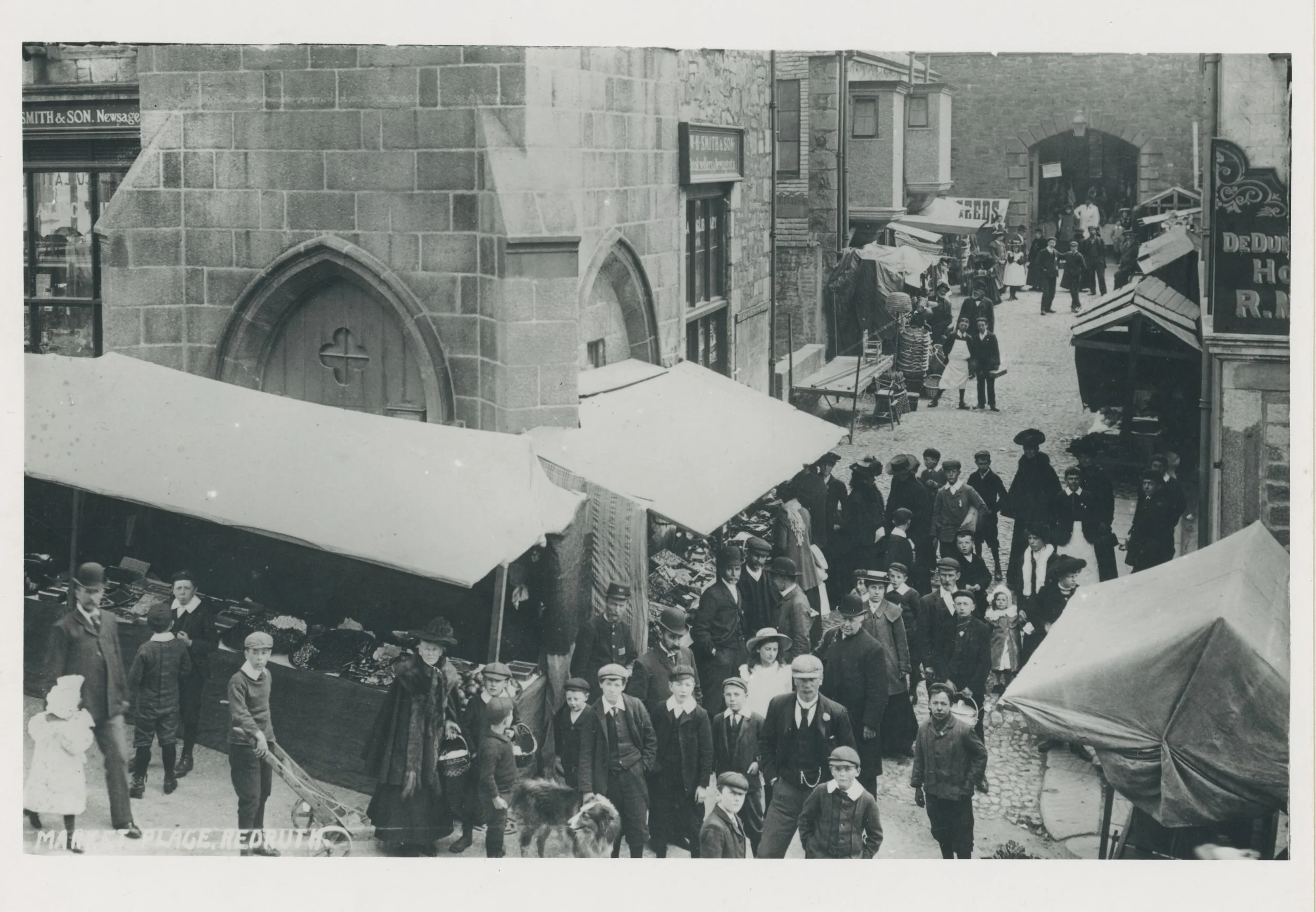
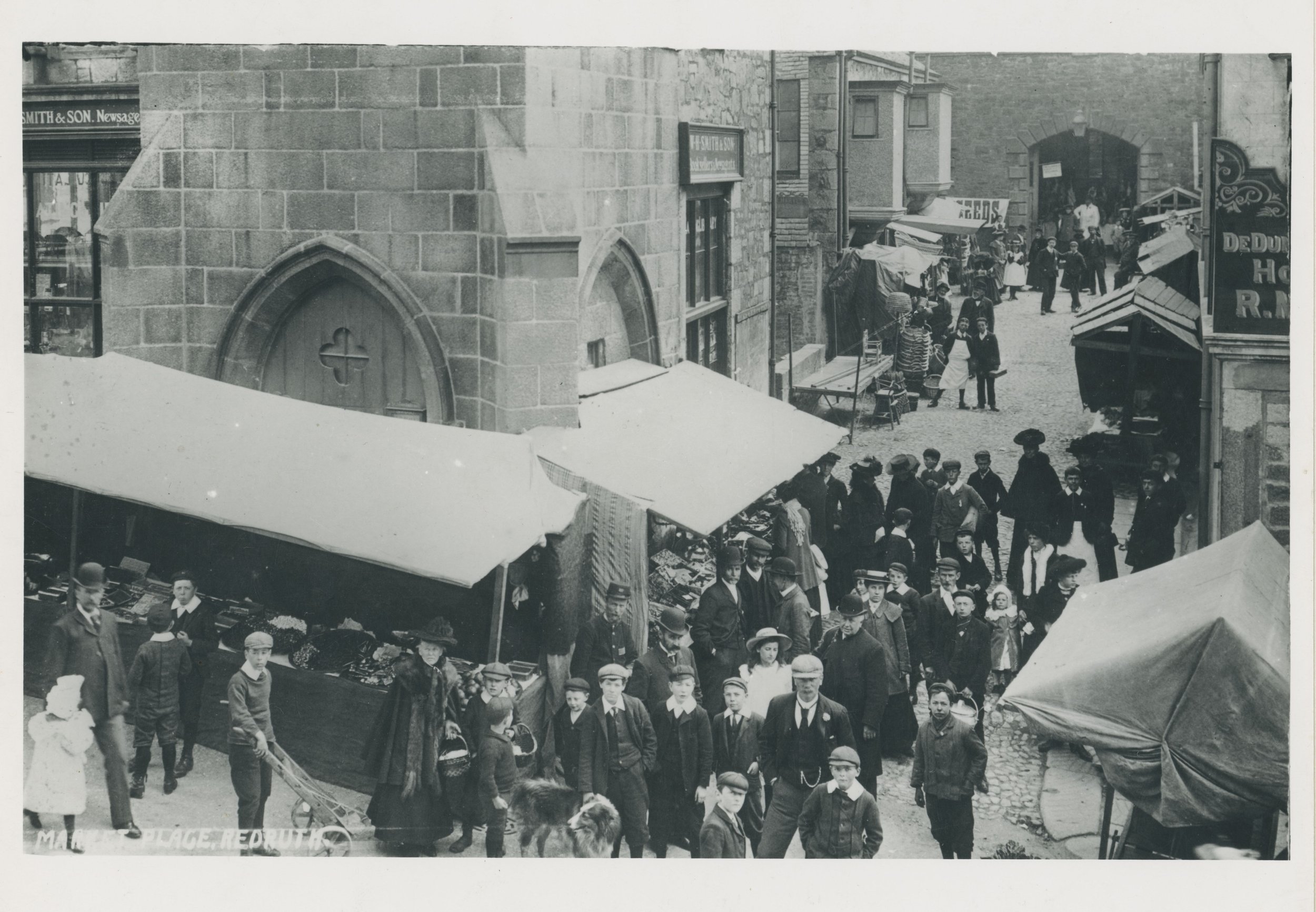
From the collections at Kresen Kernow AD2815-B-109a
1823
In 1823, Sir Francis Basset, later the 1st Baron de Dunstanville and Basset, purchased the market buildings, the rights to fairs and markets, and Fair Meadow for £1,000.
A prominent mine owner, politician and philanthropist, Basset played a significant role in Redruth's growth, with much of the wealth generated from his mining interests said to have been reinvested into supporting miners and their families.
The Basset Estate records payments of £2,000 in 1826 for the construction of a new Market House in Redruth, helping establish the market complex that continued to serve the town throughout the nineteenth century.
Did you know that Kresen Kernow holds a number of documents in its archives relating to the Basset family and its estate, just a short walk from the Buttermarket?
From the collections at Kresen Kernow AD2815-B-109c
1838
By 1838, Redruth Market had become a thriving shopping destination and was described as being supplied "in great abundance with everything that can be wanted in the ordinary concerns of life". Alongside produce, shoppers could buy fish, pork, shoes from Penzance, fabric, trimmings and a wide range of household goods, helping make Redruth one of Cornwall's busiest market towns.
The market's popularity occasionally attracted less welcome activity. In 1838, a woman named Mary Trowson was convicted after attempting to pass counterfeit shillings to traders at Redruth Market, a small but colourful reminder of the bustling trade taking place in the town.
1847
On 4 June 1847, the Cornish Food Riots reached Pool and Redruth. Years of hardship and rising food prices had left many working families unable to afford basic provisions. Hundreds of miners, labourers, women and children descended on the market demanding that prices be reduced.
Produce was seized and sold at prices the crowds considered fair, while local shops and warehouses were raided for food and supplies. It was later claimed that as many as 5,000 people, including miners and their wives, confronted the militia in Redruth before soldiers were called in to restore order.
1867
Following the financial crash known as the Panic of 1866, Cornwall's mining industry was hit hard as copper prices collapsed and mines began to close. Rising unemployment left many families struggling to afford food, and by 1867 a soup kitchen was operating from the rear of the Market House to support those in need.
The crisis accelerated the great Cornish migration, with thousands of miners leaving in search of work overseas. Between 1860 and 1900, it is estimated that around 250,000 people left Cornwall, helping spread Cornish mining skills, culture and even the Cornish pasty across the world.
1877
As Redruth continued to grow as a regional trading centre, the Meat Market was enlarged to accommodate up to 500 cattle.
The expansion reflected the importance of livestock trading to the local economy and the continuing success of Redruth's market during the late nineteenth century.
1880
Between 1880 and 1883, the Mining Exchange and Wheal Peevor Purser's Office were built on Alma Place, designed by local architect James Hicks in a mock-Gothic style.
The buildings reflected Redruth's status as one of the world's leading mining centres.
The Mining Exchange became the hub of Cornwall's mining business, replacing Tabb's Hotel as the centre for trading mining shares and conducting transactions. In just one fortnight during November 1880, around £400,000 worth of business was conducted there - equivalent to more than £42 million today.
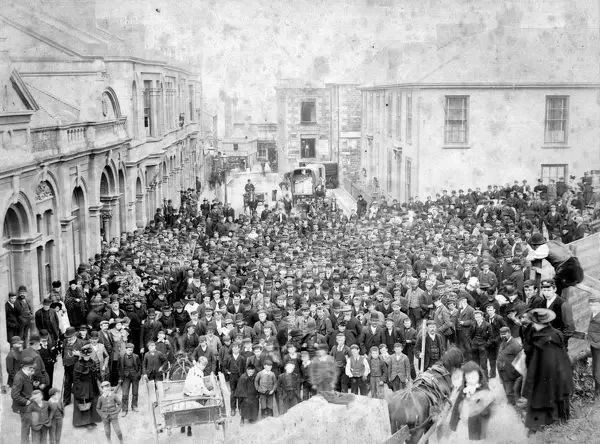
Photo by James Chenhalls
1886
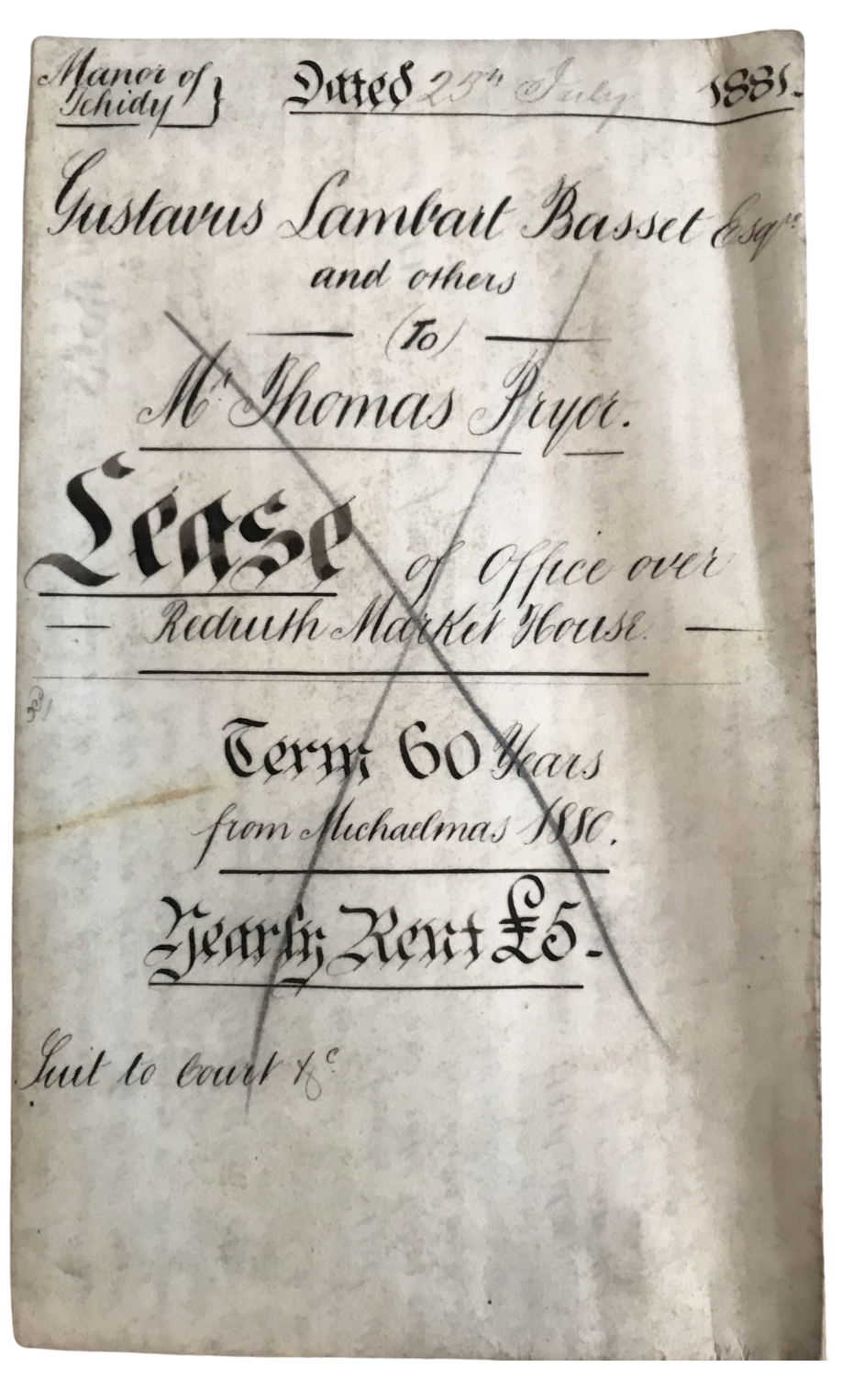
In 1886, Alfred Lanyon purchased the market buildings, Fair Meadow and the rights to the markets and fairs from Gustavus Lambert Basset, ending centuries of Basset family ownership.
The sale also included the De Dunstanville Arms and the Alma Place buildings. A mine owner and prominent local figure, Lanyon had strong links to the market. His father, John Charles Lanyon, was recorded as a market occupier in 1841, trading as a tanner. Alfred paid just under £11,000 for the estate - equivalent to around £1.2 million today.
1888
In 1888, Assistant Commissioner Arthur J. Ashton visited Redruth on behalf of the Royal Commission to investigate the operation of local markets and fairs. After inspecting the cattle market at Fair Meadow and the Buttermarket, he reported that "the general market is not quite full but is very prosperous. This is about the best butchers' market in Cornwall."
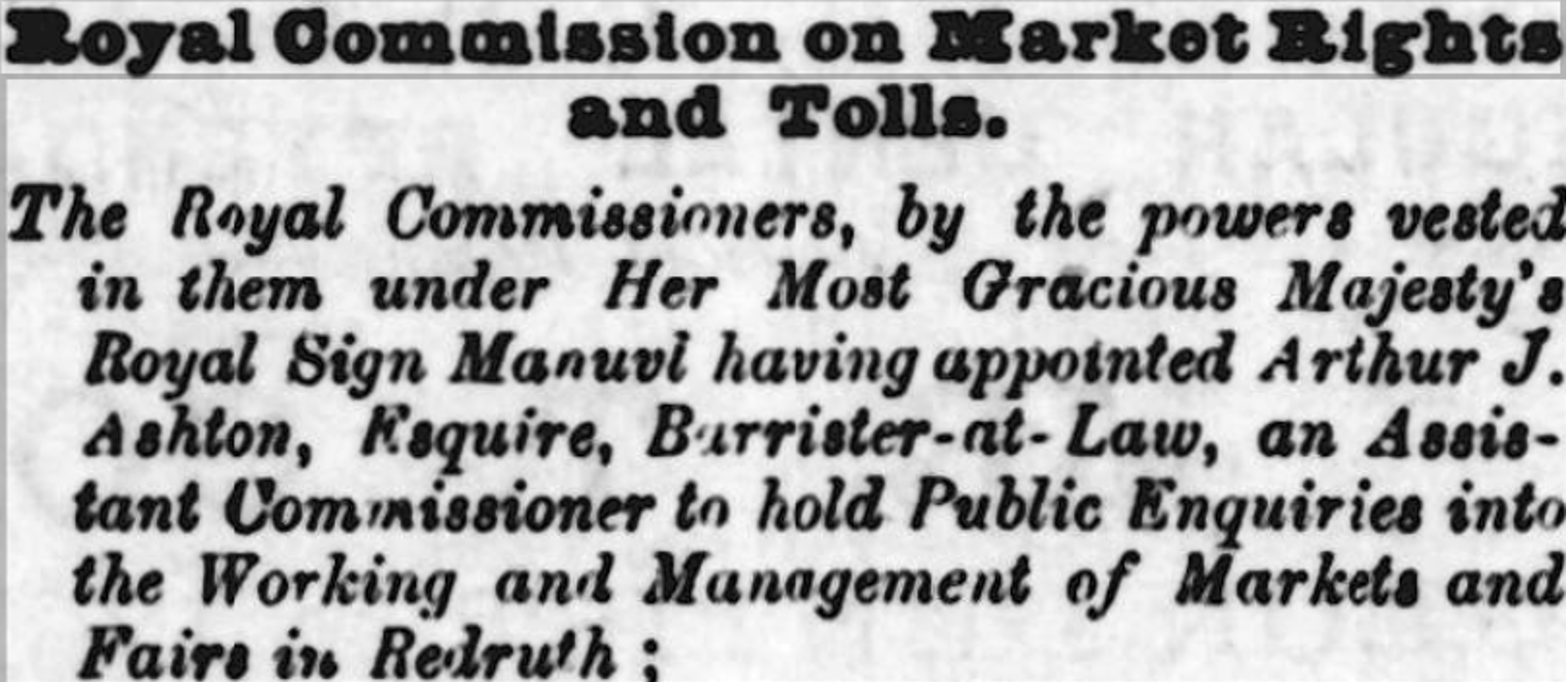
T.R. Mills, Cornubian & Redruth Times, British Newspaper Archive | 5th October 1888
1892
By 1892, Redruth had become the largest market in the West Country, a position it would hold until the 1980s. Renowned for its pork trade, pigs arrived in huge numbers by road and rail, with meat and produce bought and sold before being transported across Cornwall and beyond.
The market's success was closely linked to Redruth's railway connections, which helped establish the town as one of the region's most important trading centres.
1901
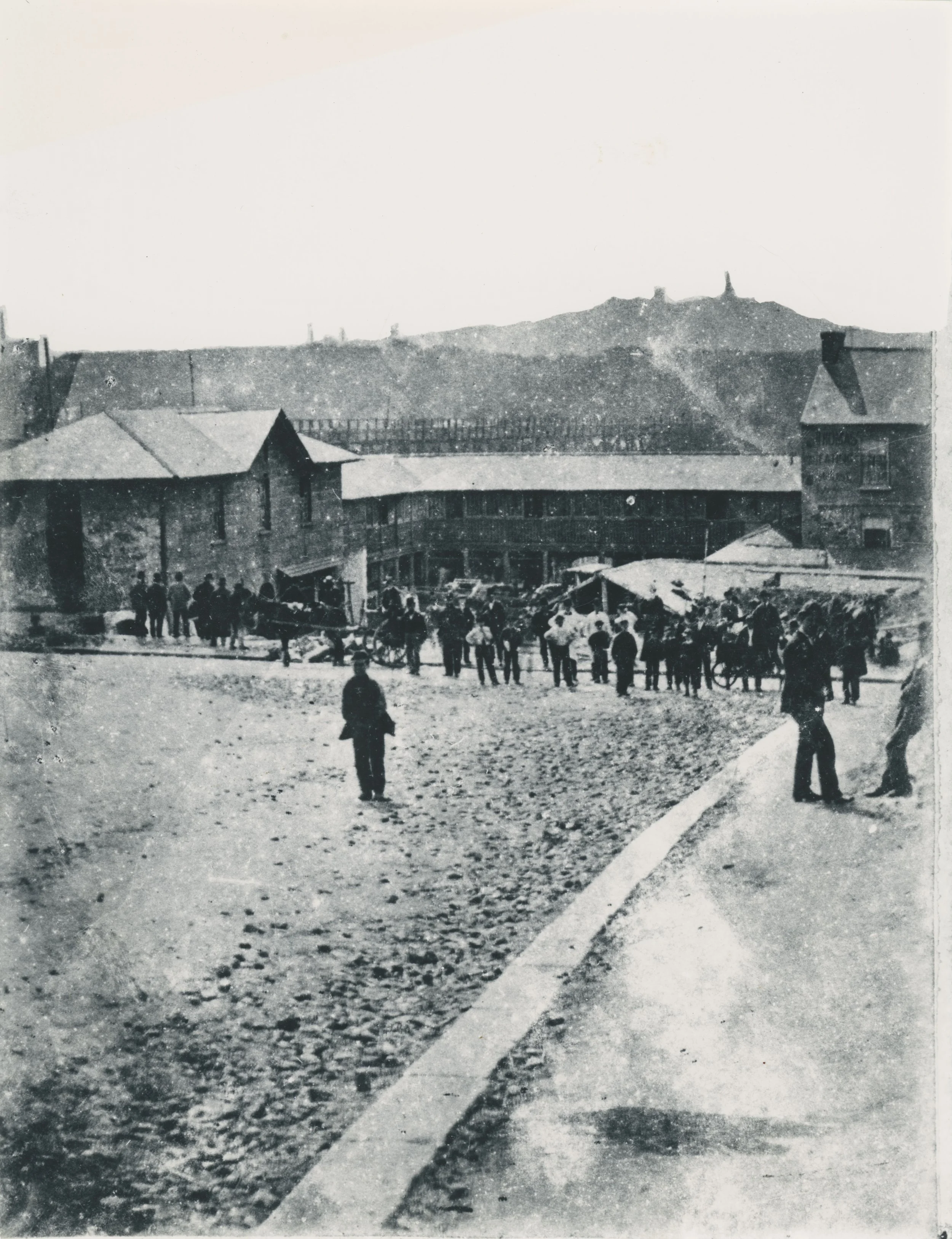
By 1901 the two-storey Market House ceases to be used for market purposes. Its upper floor finds occasional use as an auction house, and its ground floor transforms into a printer’s workshop.
At the same time, increasing numbers of butcher's shops and meat companies were opening across Redruth, drawing trade away from the traditional Friday markets and signalling the start of a gradual decline in the town's livestock trade.
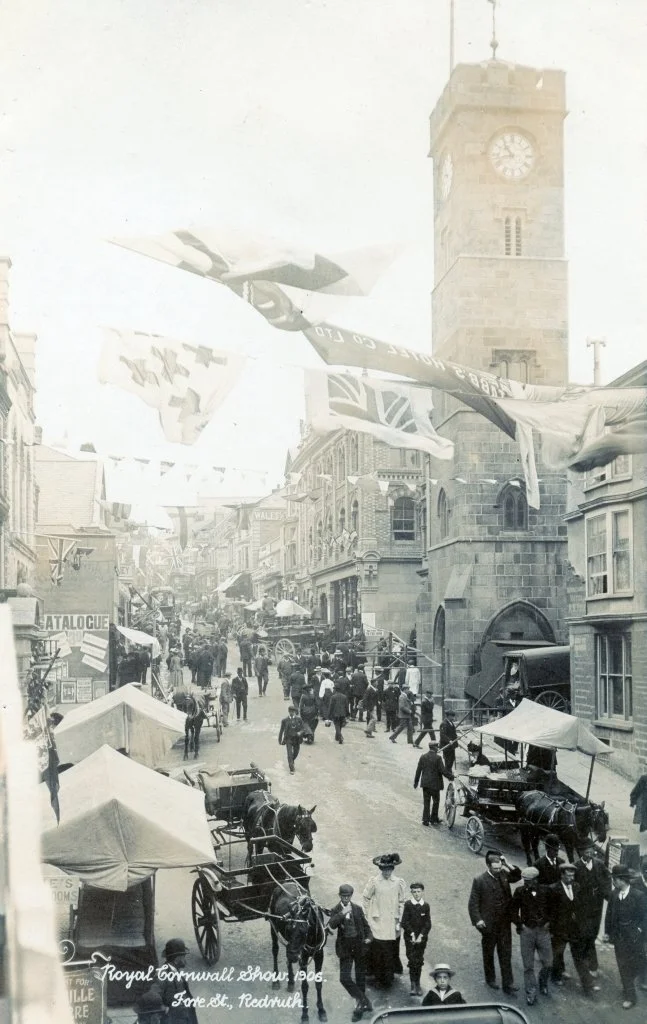
Paddy Bradley Collection, Cornish Memory, BRA_29_006
1910
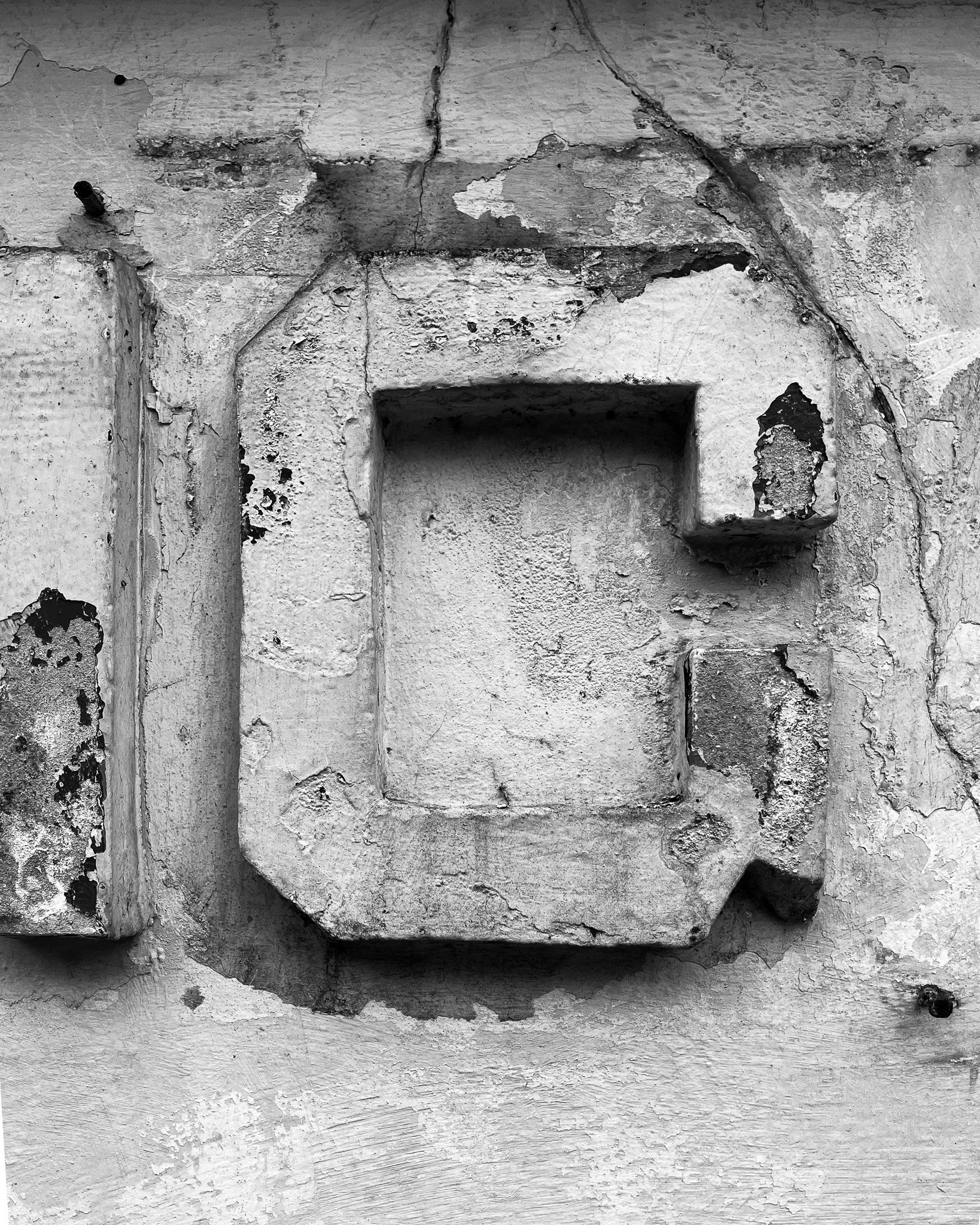
In September 1910, a fire broke out at P. R. Earle & Co. Printing Works, which occupied part of the former Market House on Station Hill. The blaze was discovered by Miss Earle, who raised the alarm, and passers-by helped extinguish the flames with buckets of water before the fire brigade arrived. Damage was minimal, and the building was saved.
More than a century later, during the Buttermarket restoration in 2023, the original P. R. Earle & Co. painted sign was uncovered on the Station Hill elevation, providing a visible link to the building's past.
1914
With the First World War, horses were mustered in Fair Meadow for military service, creating challenges for local farmers as they struggled to bring in the harvest without vital working animals.
Just weeks earlier, Fair Meadow had witnessed a very different spectacle when two monkeys, including a baboon, from a travelling show escaped and spent the day roaming the rooftops around the market buildings before being recaptured after nightfall.
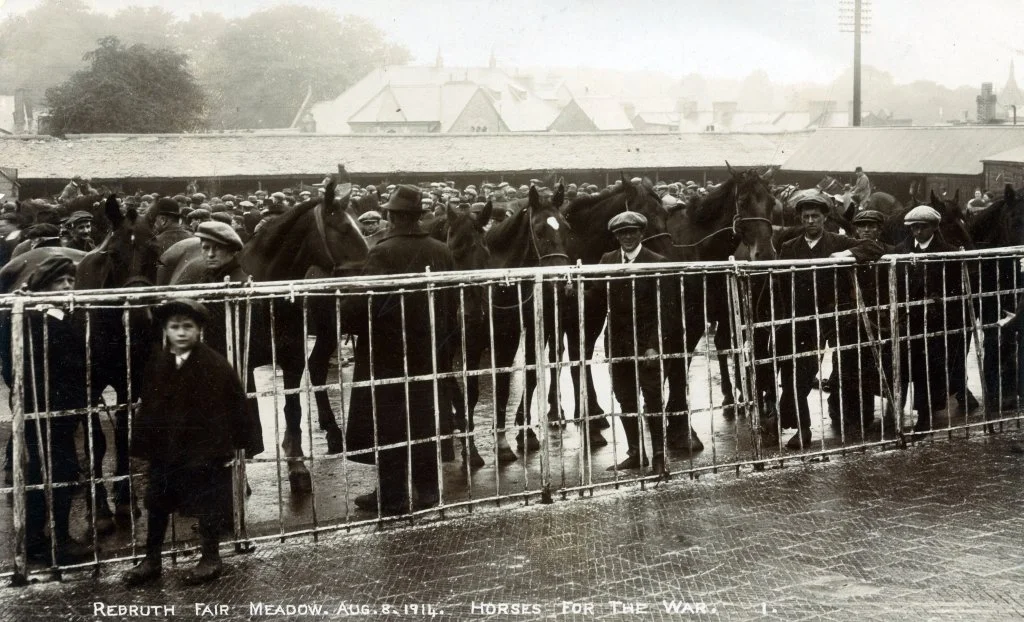
Paddy Bradley Collection, cornishmemory.com BRA_30_047
5th March 1915
On 5 March 1915, Alfred Lanyon, owner of the market buildings, Fair Meadow and the market rights, died.
Following his death, his estate offered to sell the market buildings and Fair Meadow to Redruth Urban District Council, but the offer was withdrawn in 1919.
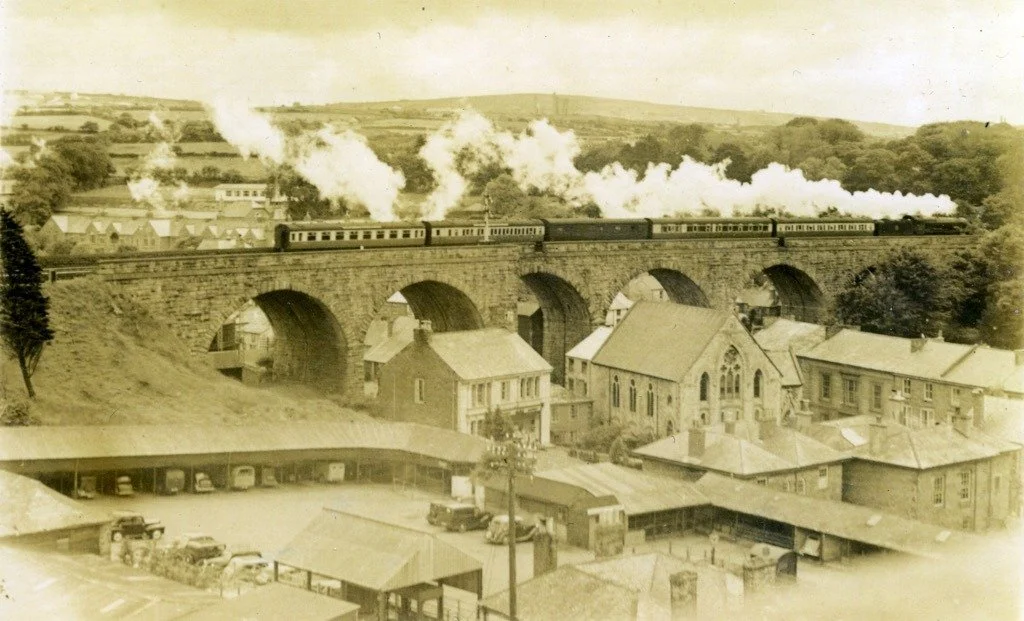
Mac Waters Collection, cornishmemory.com WAT_22_199
1919
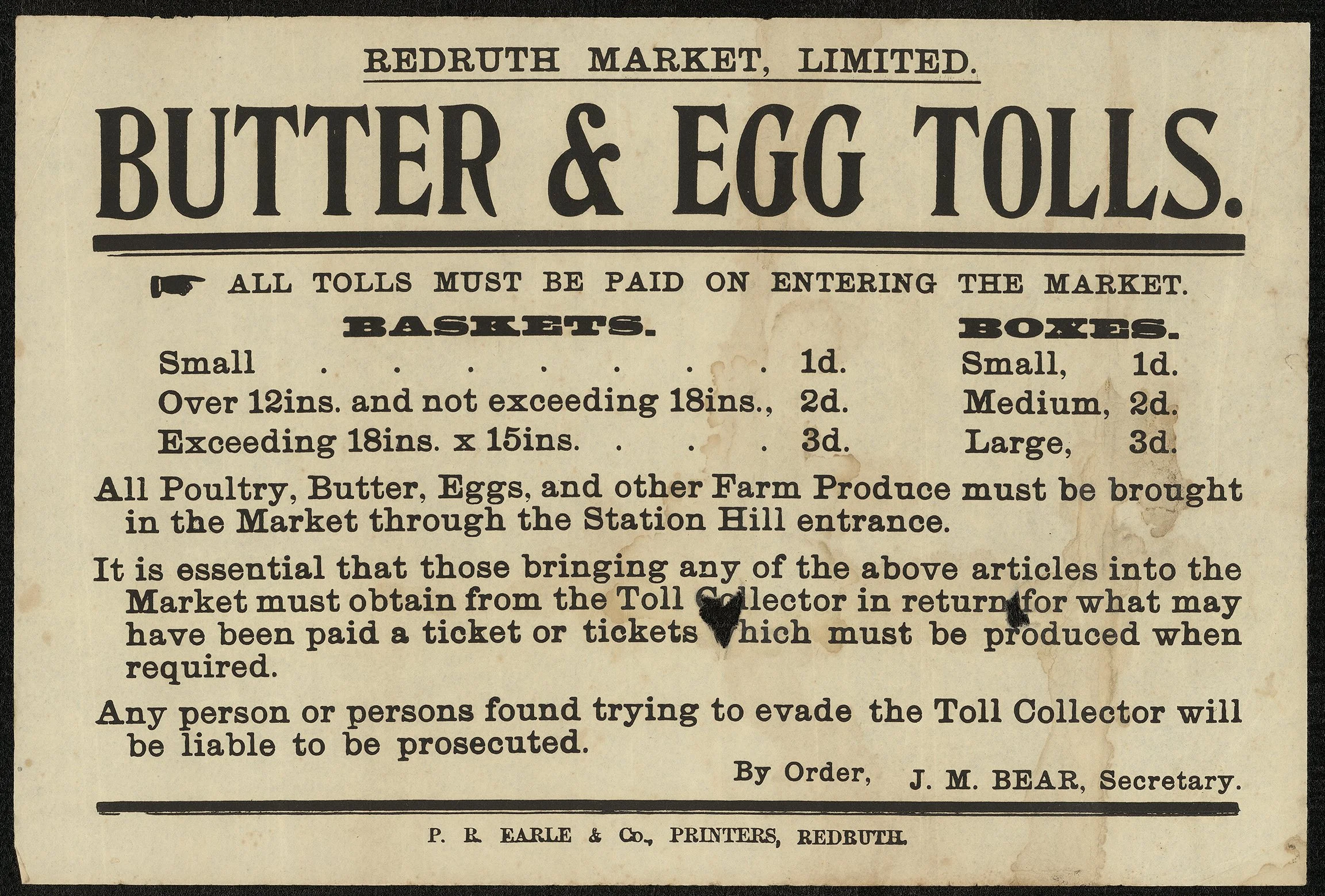
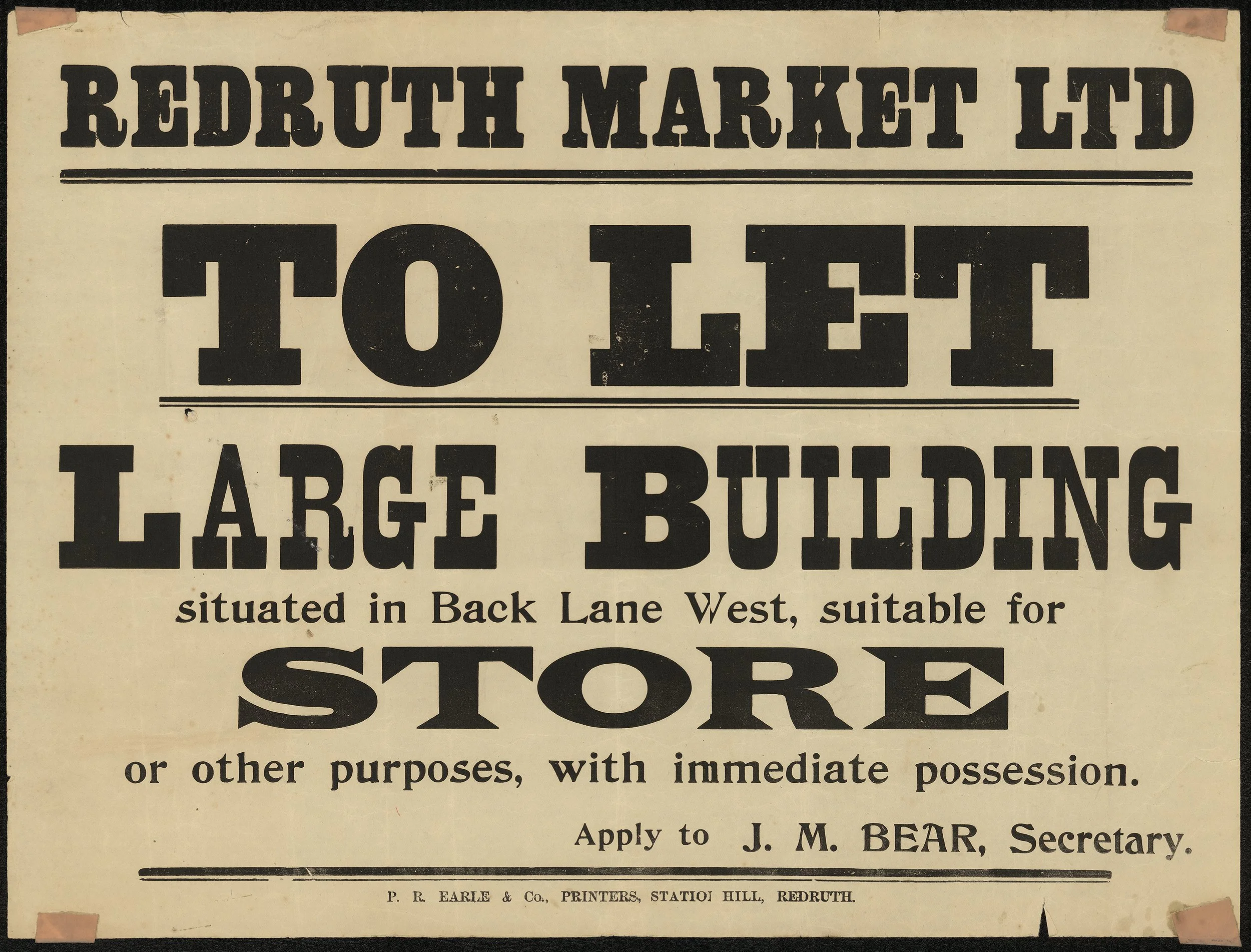
Local business leaders formed the Redruth Market Company to purchase the market buildings and Fair Meadow.
1920
Redruth became the centre of the Cornish Butter Boycott, a protest against soaring butter prices following the First World War.
On a busy Friday market day, February 27th 1920, hundreds of miners and local residents gathered around the Buttermarket and town markets, pressuring traders to lower prices and making butter the focus of a county-wide campaign.
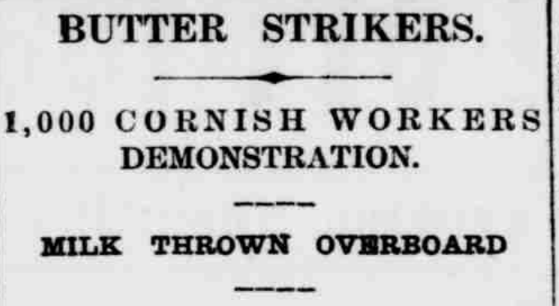
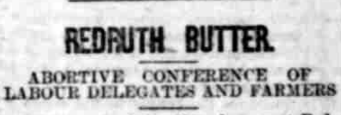
Cornish Post and Mining News, March 6 1920, pg 5
Post WW2
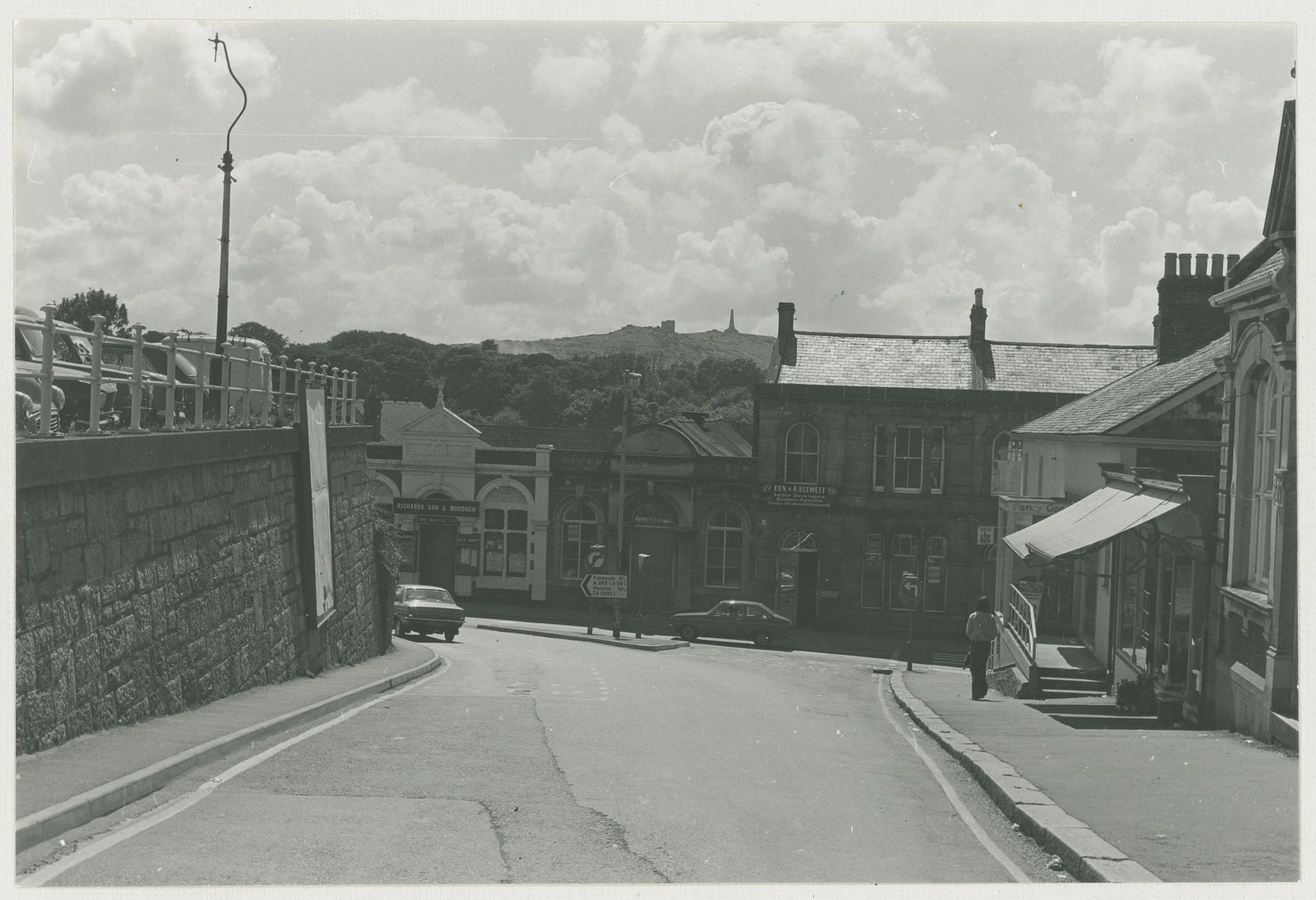
Following the Second World War, the market buildings adapted to changing times. The former offices and commercial spaces found new uses, including an opticians, auctioneers, housing office, day centre and a charity shop.
One of the most unusual residents was the Lorna Doone, believed to be the last stagecoach to operate in the Westcountry. Purchased by six Redruth businessmen in 1950 to preserve a piece of local heritage, the 25-seat coach was stored in the Buttermarket and later became a familiar sight at local events and festive celebrations.
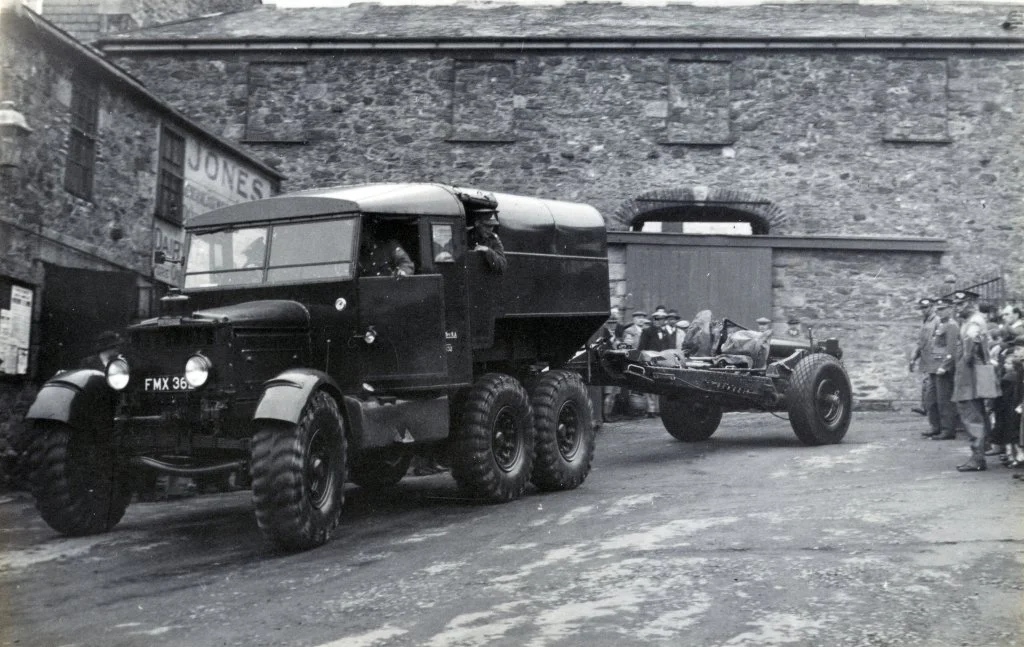
Paddy Bradley Collection, cornishmemory.com BRA_30_090
1958
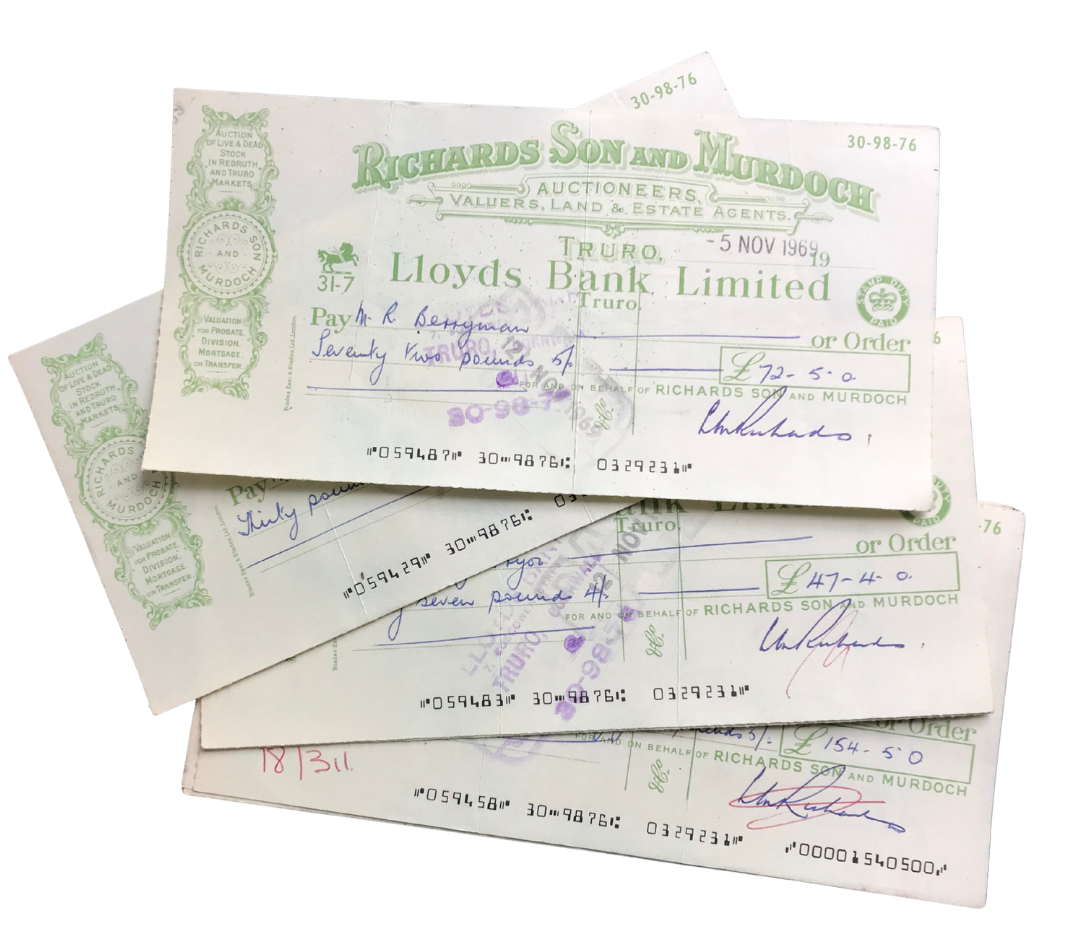
The market ceases trading, owing to a lack of traders and increased costs. Redruth Market Company sell the Market Hall buildings to Dowty’s, a furnishing business.
Weekly markets continued in Fair Meadow and elsewhere within the market complex, ensuring Redruth's long market tradition endured through changing times.
10th September 1982
A fire breaks out in through Dowty's furniture warehouse in the former Meat Market building and spreads to buildings on Alma Place.
Described by the West Briton as "Redruth's biggest and costliest fire", the blaze destroyed much of the former market complex, including the bank and post office, leaving only the outer walls standing in places.
Seventy firefighters, eleven fire engines and thirteen water jets were needed to tackle the fire. Despite extensive investigations, the cause was never established. The damage left parts of the town centre derelict for many years and marked a significant turning point in the history of the Buttermarket site.
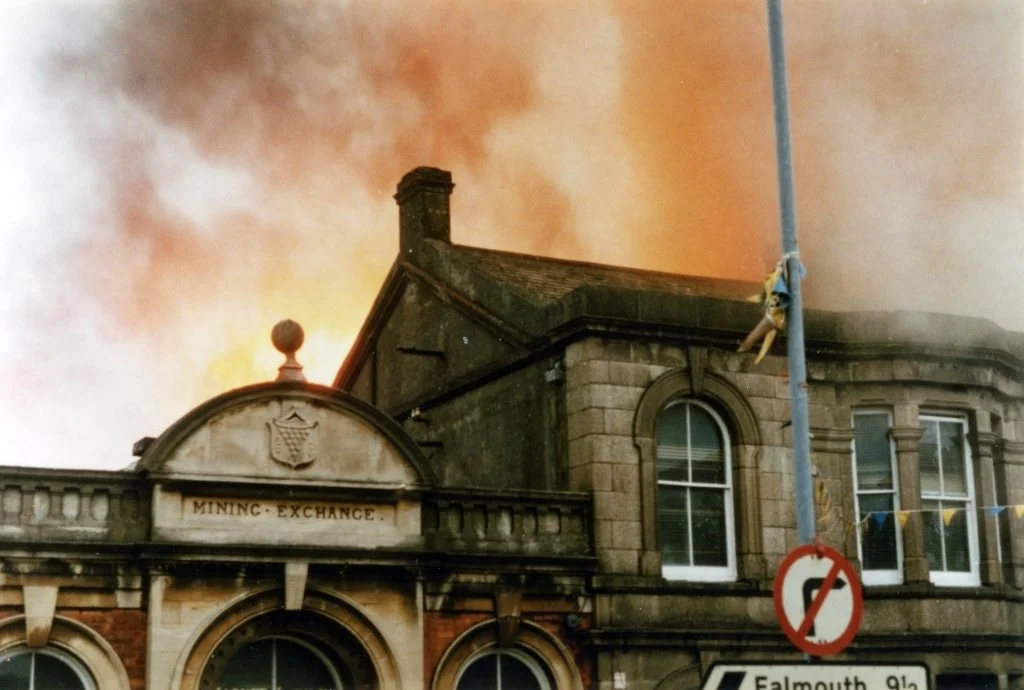
Paddy Bradley Collection, cornishmemory.com BRA_16_040
Late 1980s
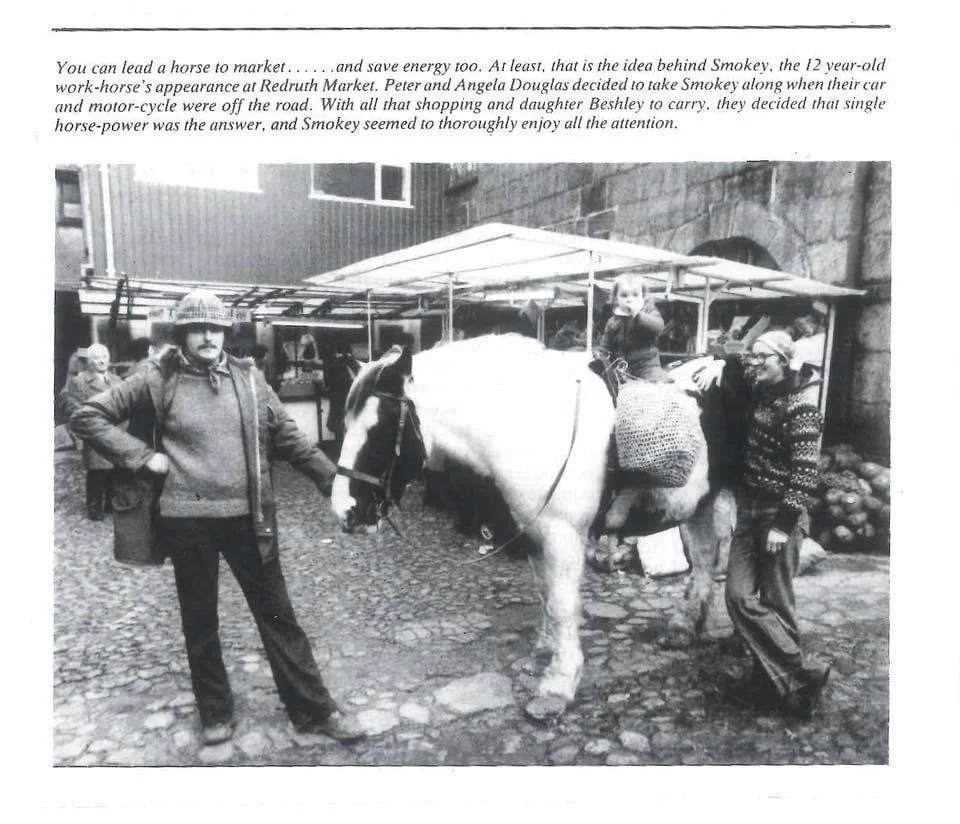
In January 1989, the final cattle market was held on Fair Meadow after generations of livestock trading.
The land was sold and became the car park seen today. Plans for a major retail and housing development were proposed but never materialised.
Proceeds from the sale enabled the Redruth Market Company to carry out much-needed repairs to the Buttermarket, including repaving the courtyard, repairing gutters, installing new gates and replacing windows. While many units stood vacant, some commercial activity continued, with occasional markets and plans to create small workshops for local traders and craftspeople.
1996
Conservation Area Consent was granted for the redevelopment of the former Meat Market site, with plans for retail units, sheltered accommodation and the new Cornish Studies Library. Work began on site in 2000.
The library became an important home for Cornwall's historic archives and collections before relocating in 2019 to Kresen Kernow, Cornwall's archive and research centre, housed in the restored Redruth Brewery complex.
2001
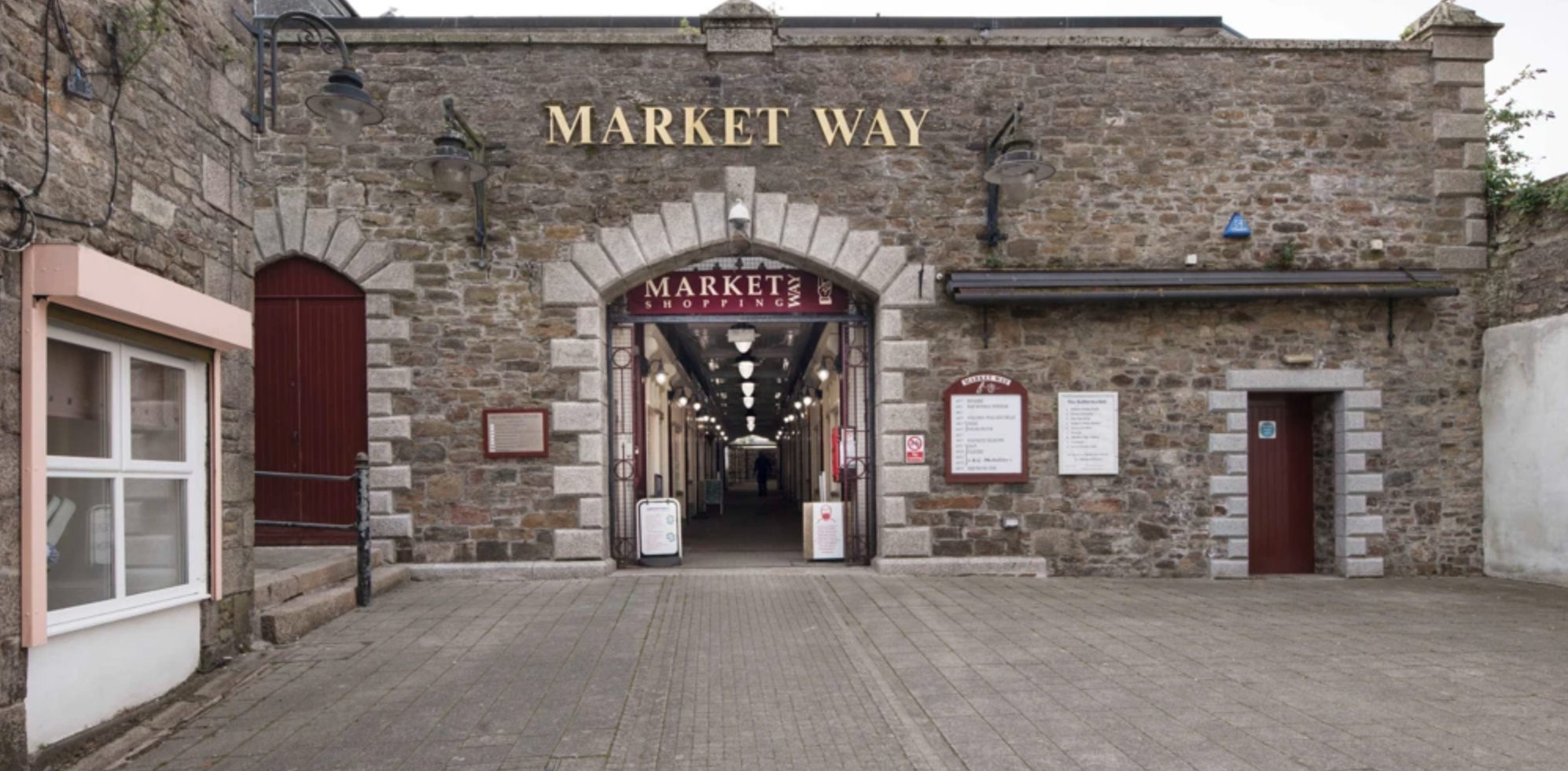
Work took place to regenerate the Market Way, this time as an arcade of shops, an office and a residential space. The new arcade was built within the remaining walls of the market building, which were all that remained after the disastrous fire in the 1980s. The arcade included a games shop, a hairdresser and a café.
© Historic England
© Historic England
2017 - 18
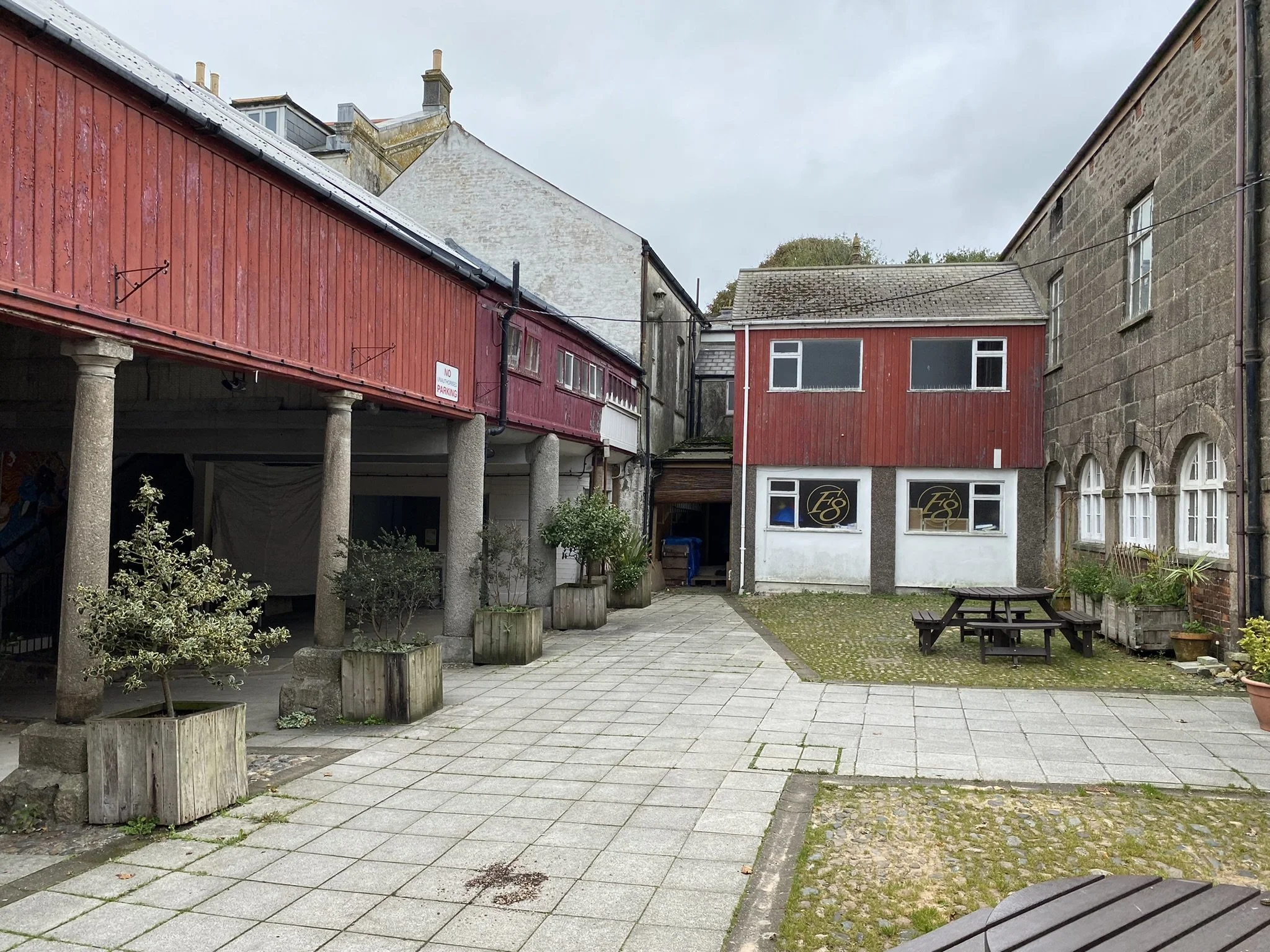
Redruth Revival Directors use in-kind contributions to purchase the freehold of the Buttermarket and Mining Exchange from Redruth Market Company after a century of stewardship.
Regular monthly markets return to the Buttermarket and Market Strand as a joint project between Redruth Revival, Redruth Town Council and the Redruth & District Chamber of Commerce.
© Historic England
2020
Redruth receives High Street Heritage Action Zone funding, with the Buttermarket as one of its two key capital projects. Redruth Revival appoints Architectural Thread as design lead for the Buttermarket Scheme.
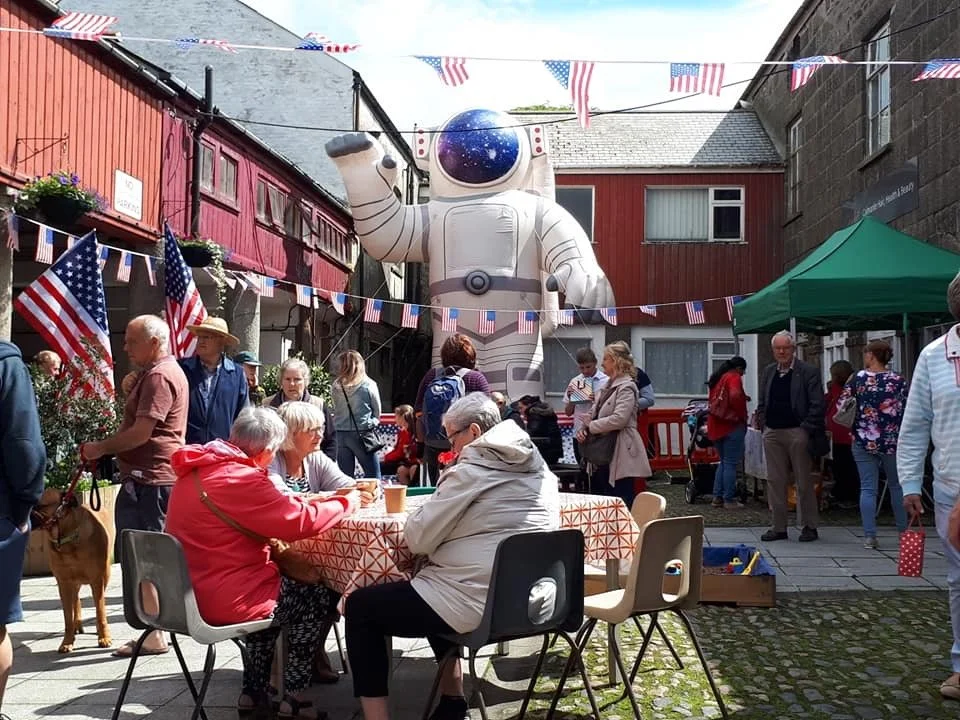
Redruth Revival organises markets, festivals, performances and community events held within the site, undertaking extensive consultation with 671 local people to help shape its future.
2021 - 23
Redruth Revival acquires the freehold of the Wheal Peevor Purser's Office, bringing all of the key buildings within the Buttermarket complex under a single ownership.
Major funding awards follow, including £3.34 million from The National Lottery Heritage Fund and £300k from the Architectural Heritage Fund. Planning permission is granted later that year, local contractor Jewell Construction is appointed, and restoration work begins on site in January 2023.
2024
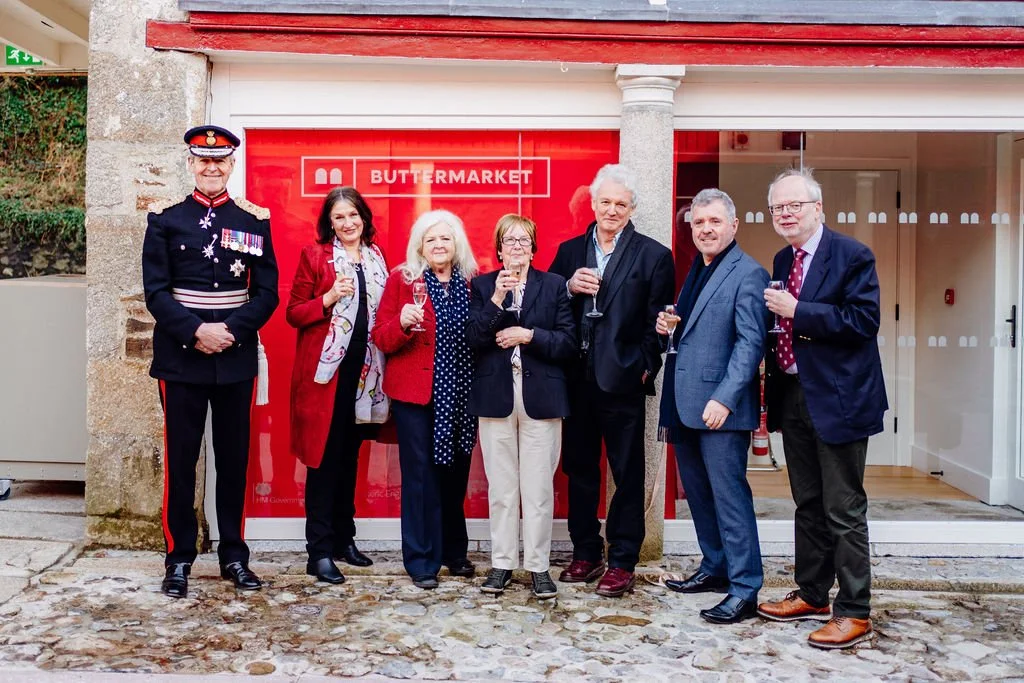
The Buttermarket reopens to the public on 18th November 2024, showcasing a vast array of street food kitchens, offices and studios upstairs for local businesses, a retail unit and gallery space, plus an open courtyard ready to host many events.
Now, it’s over to you to fill the Buttermarket with new memories and stories…
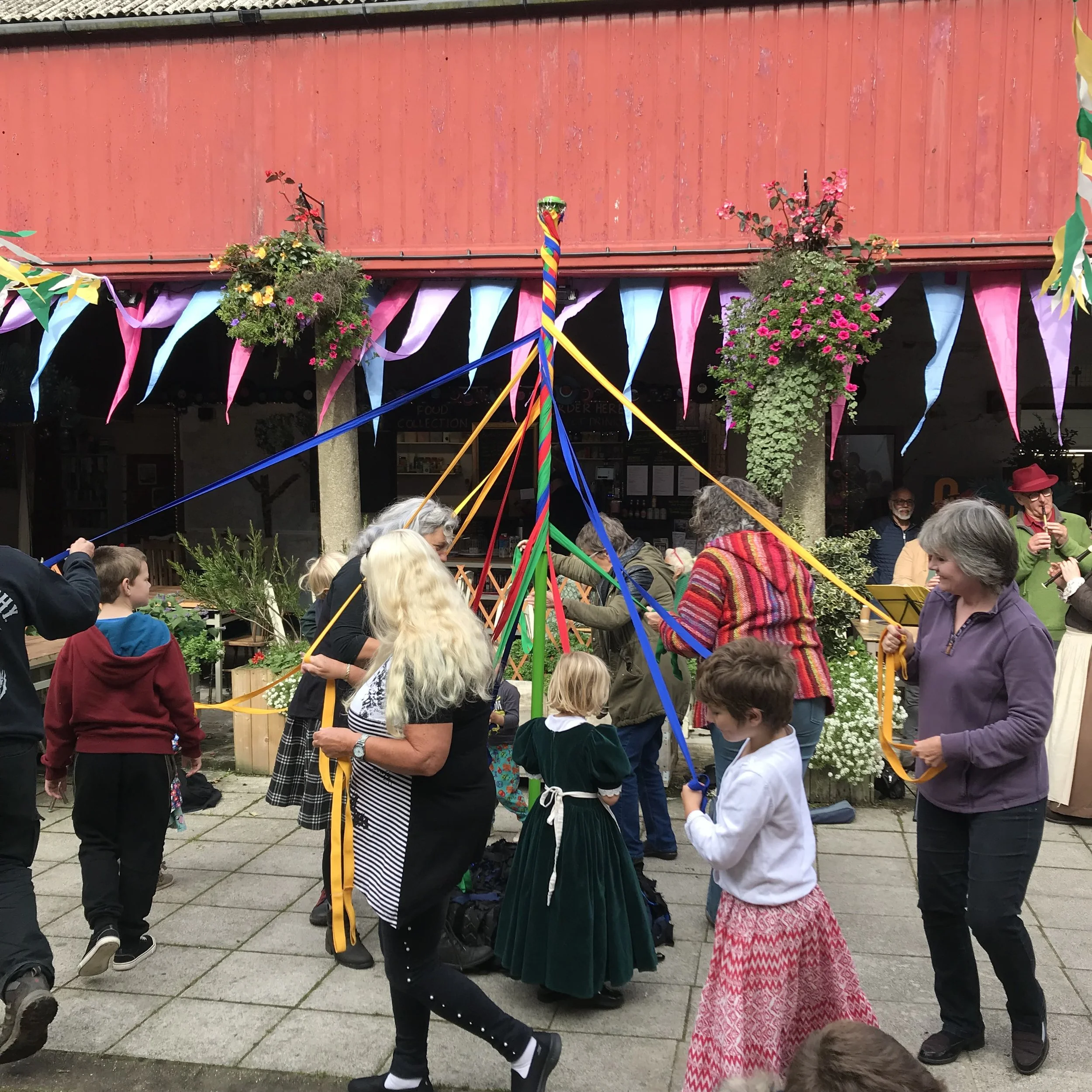
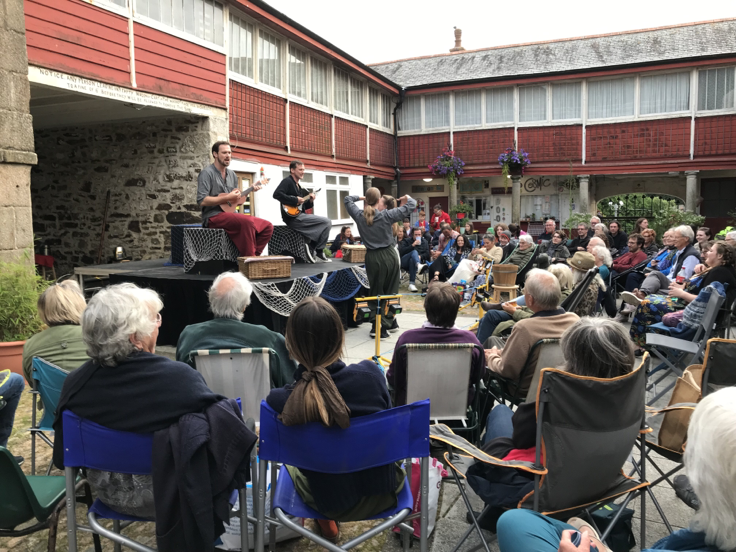
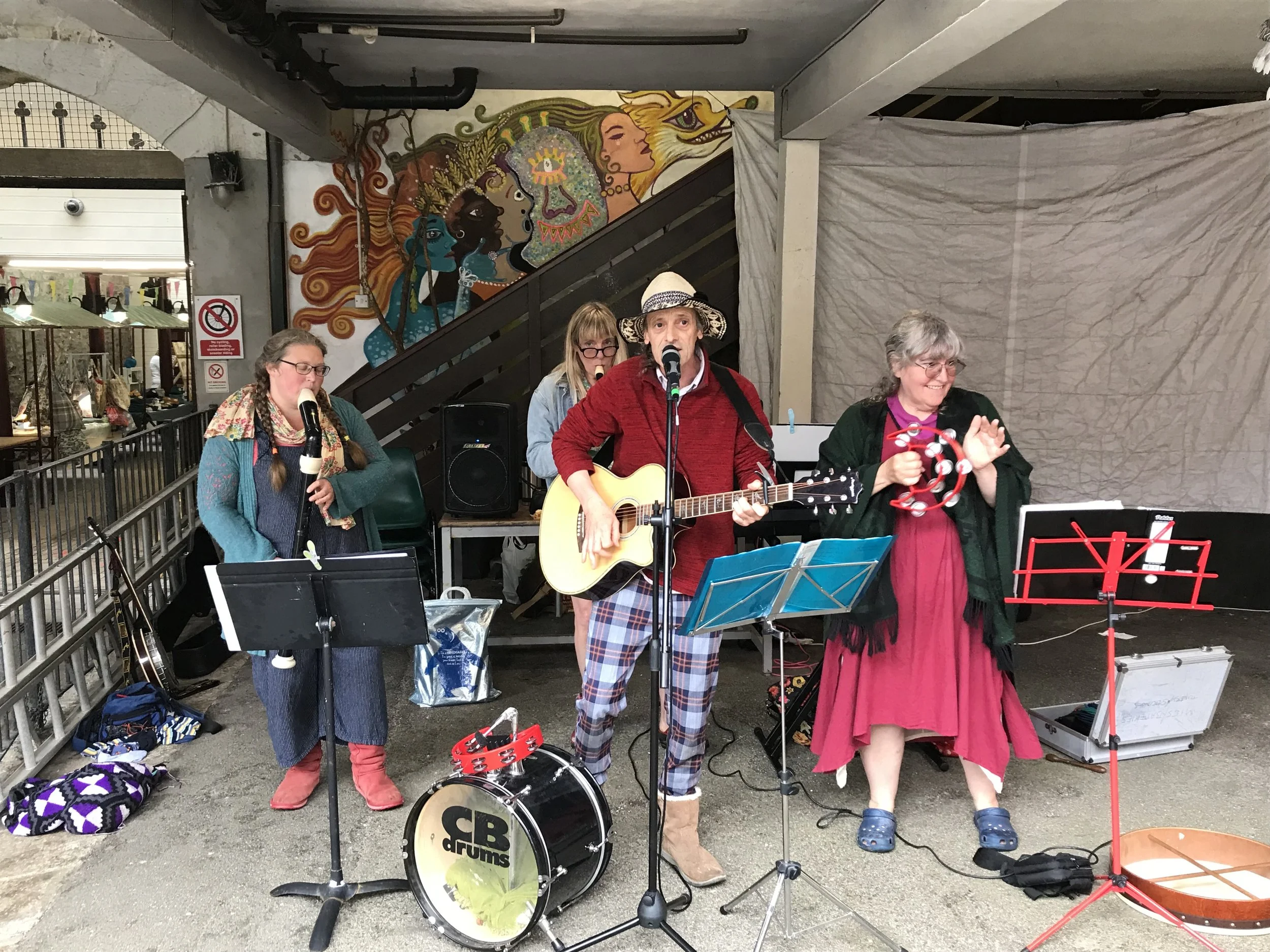
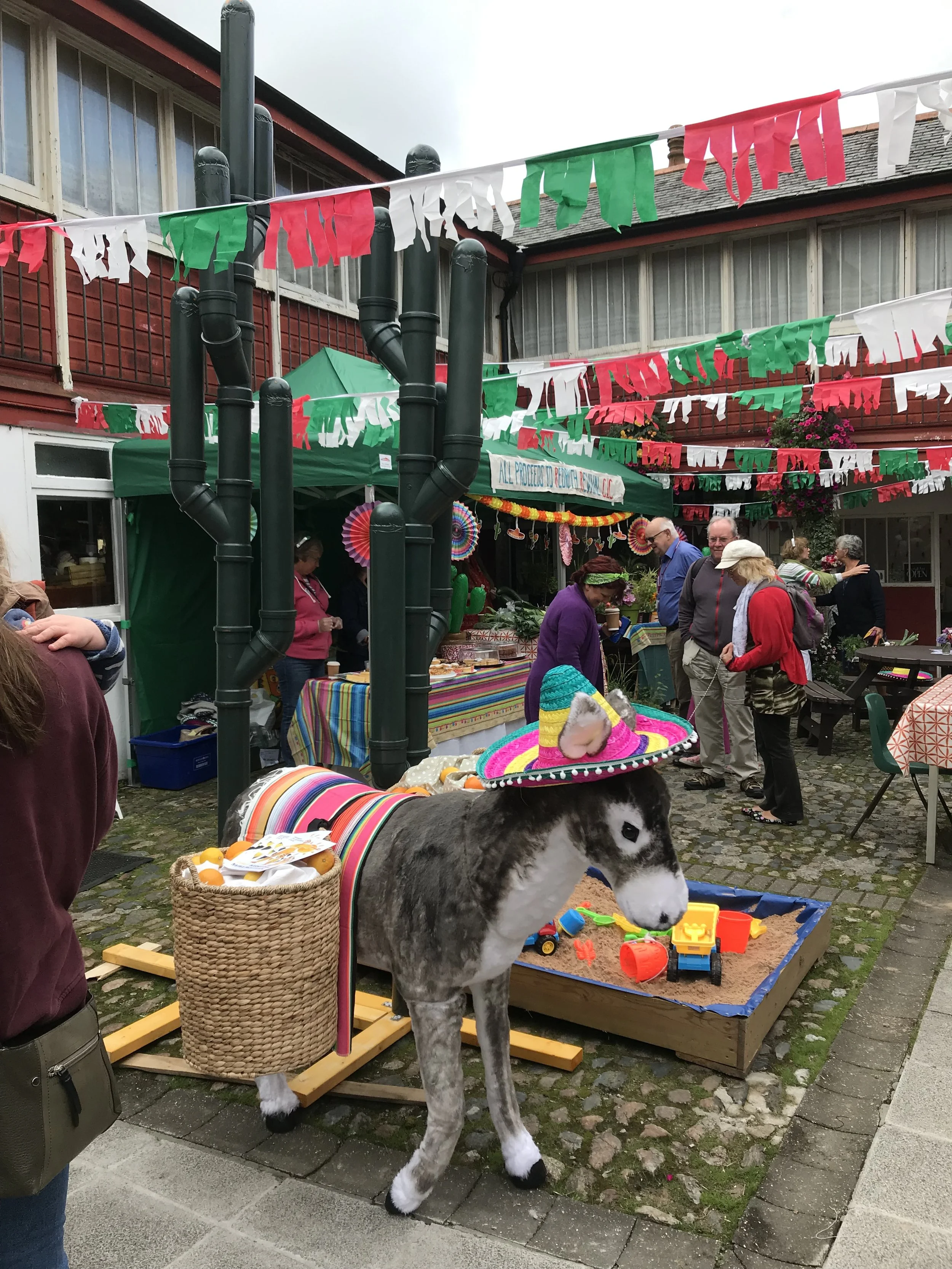
Images from activities at the Buttermarket pre-renovation under Redruth Revival’s ownership: