

Building Restoration
The Buttermarket Project is a heritage-led regeneration of one of Redruth's most significant historic sites.
Once a neglected cluster of Grade II listed buildings at risk of further decline, the Buttermarket, Auction House, Wheal Peevor Purser's Office, Mining Exchange and market courtyard have been carefully restored and brought back into active use. Today, the site supports food entrepreneurs, independent businesses, artists, community organisations and cultural events, helping to drive economic and social activity in Redruth town centre.
Led by Architectural Thread, the restoration balanced heritage conservation with contemporary design. The approach focused on revealing the character of the historic buildings, removing unsympathetic alterations and improving connectivity throughout the site, while ensuring the spaces could meet modern needs.
The result is a vibrant destination that respects nearly 200 years of history while creating opportunities for future generations.
Prior to restoration, large parts of the site were vacant, inaccessible and in poor condition. Years of piecemeal alterations had obscured many original architectural features, while several buildings required significant repair and investment to secure their future.
The project sought not only to preserve the buildings but to return them to productive use at the heart of Redruth town centre.
96%
building costs spent locally
4
Grade II at-risk buildings saved
10
regional and national awards
16
construction apprentices
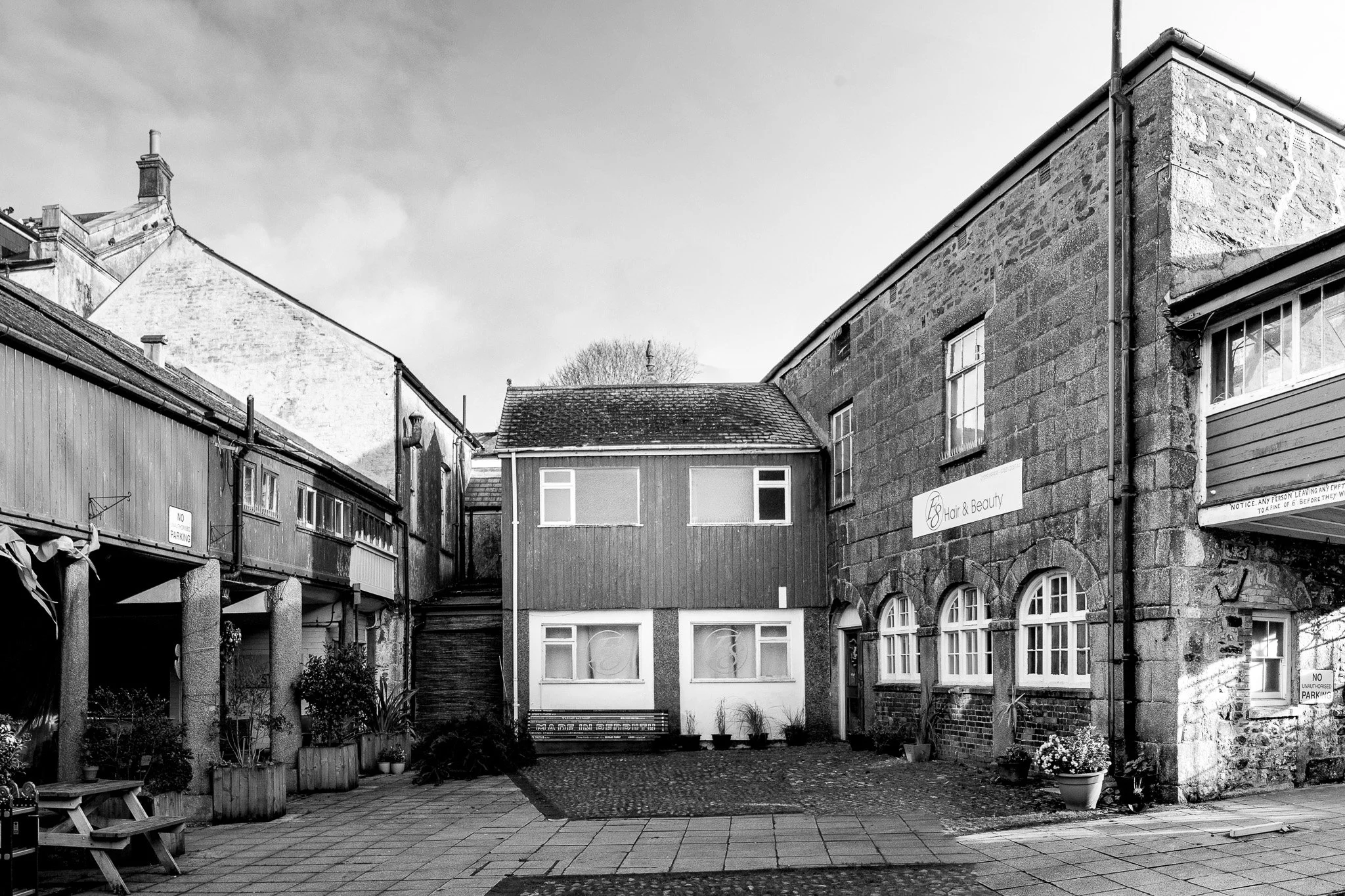
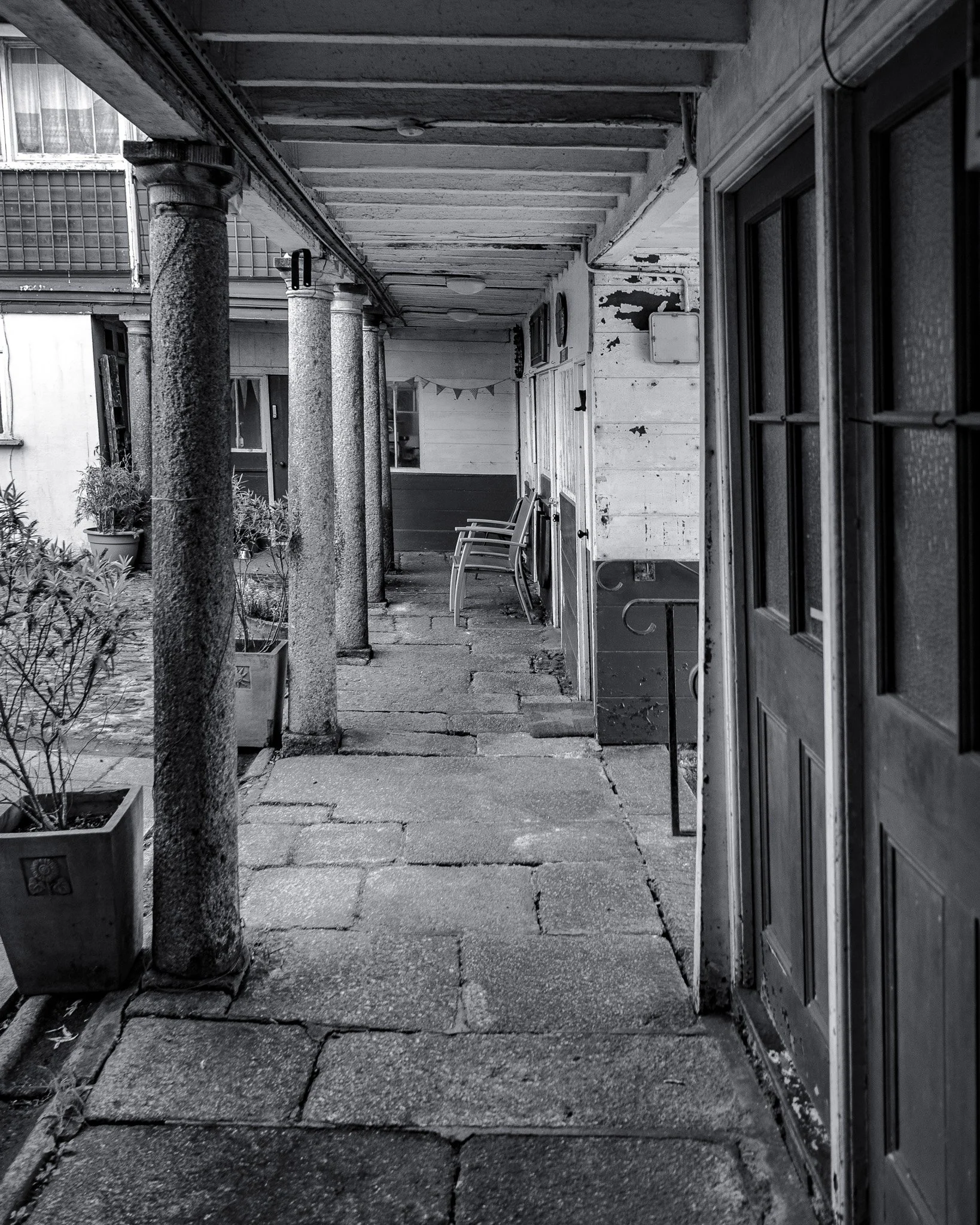
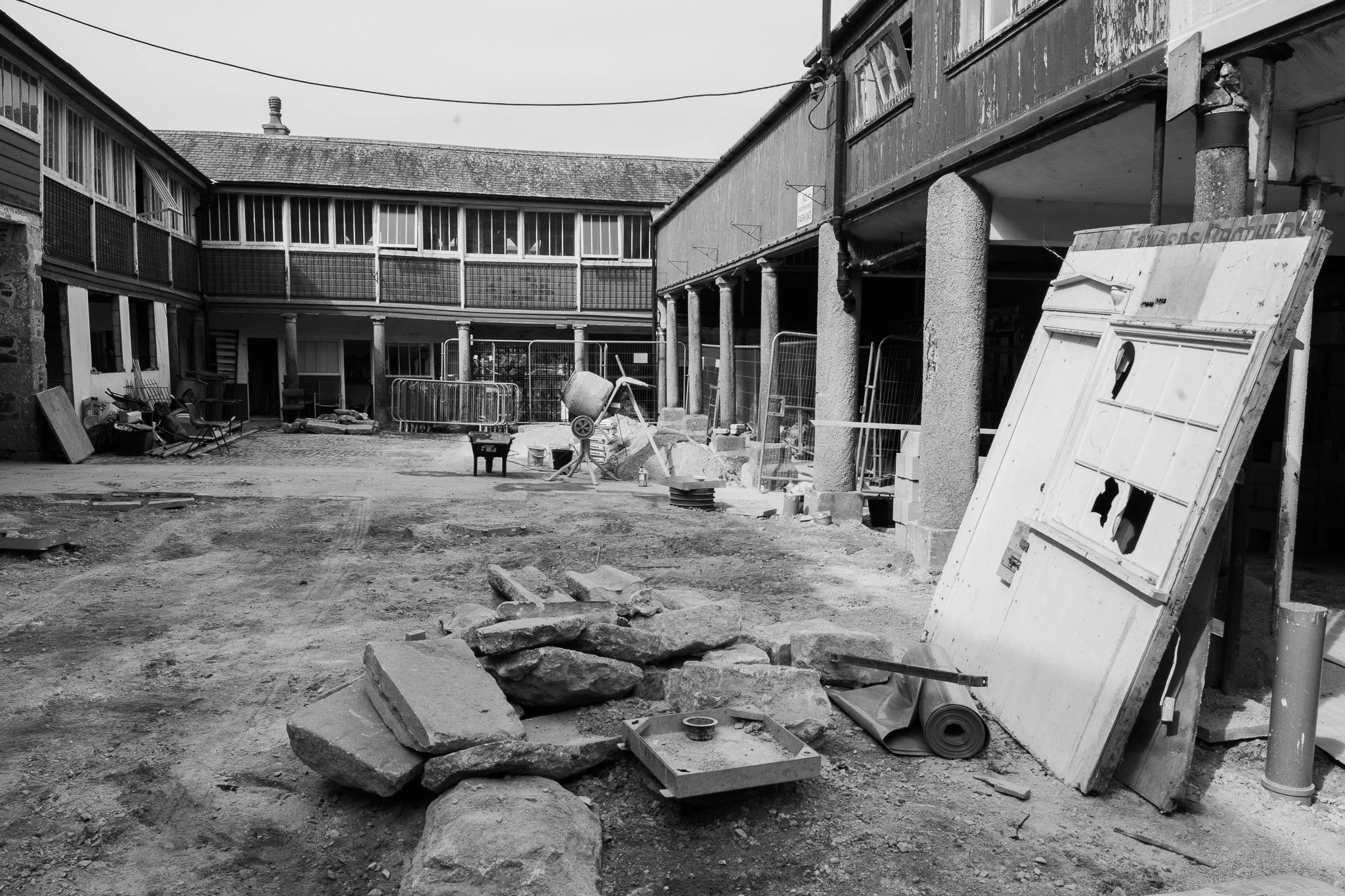
A light-touch conservation approach was adopted throughout the project. Where possible, original features were retained, repaired and celebrated. Historic arches were revealed and restored, helping reconnect spaces across the site and improve circulation through the courtyard. Original shopfront details and historic openings were carefully preserved to maintain the character and rhythm of the buildings.
Traditional slate was specified for the roofs, reflecting the site's listed status and location within the Cornwall and West Devon Mining Landscape UNESCO World Heritage Site.
The courtyard was designed to remain fully accessible while retaining its historic character. Original cobbles were reused around the perimeter, while reclaimed Cornish granite was incorporated to create smooth, level access throughout the site.
A defining feature of the project is the contemporary Food Hall façade, clad in hand-crafted recycled glass shingles and slate. Designed to complement the historic buildings rather than compete with them, the façade signals a new chapter in the Buttermarket's story while drawing inspiration from traditional Cornish building materials.
“From the earliest conversations through to completion on site, Redruth CIC, the consultant team, contractor, specialist craftspeople, funders and local stakeholders shared a commitment to creating a place that respects its heritage while embracing a new community-centred future, demonstrating how careful repair and imaginative reuse can breathe new life into historic buildings and the communities they serve. And perhaps no detail captures that spirit better than the giant disco ball that welcomes all visitors"”
Claire Fear, Architect, Architectural Thread


Reclaimed Materials
Throughout the restoration, historic materials and architectural features were carefully reused, repurposed and restored wherever possible. From original building fabric to reclaimed columns sourced from across Cornwall, materials were given a new life throughout the site, ensuring the Buttermarket's heritage remains visible in every corner of the development.
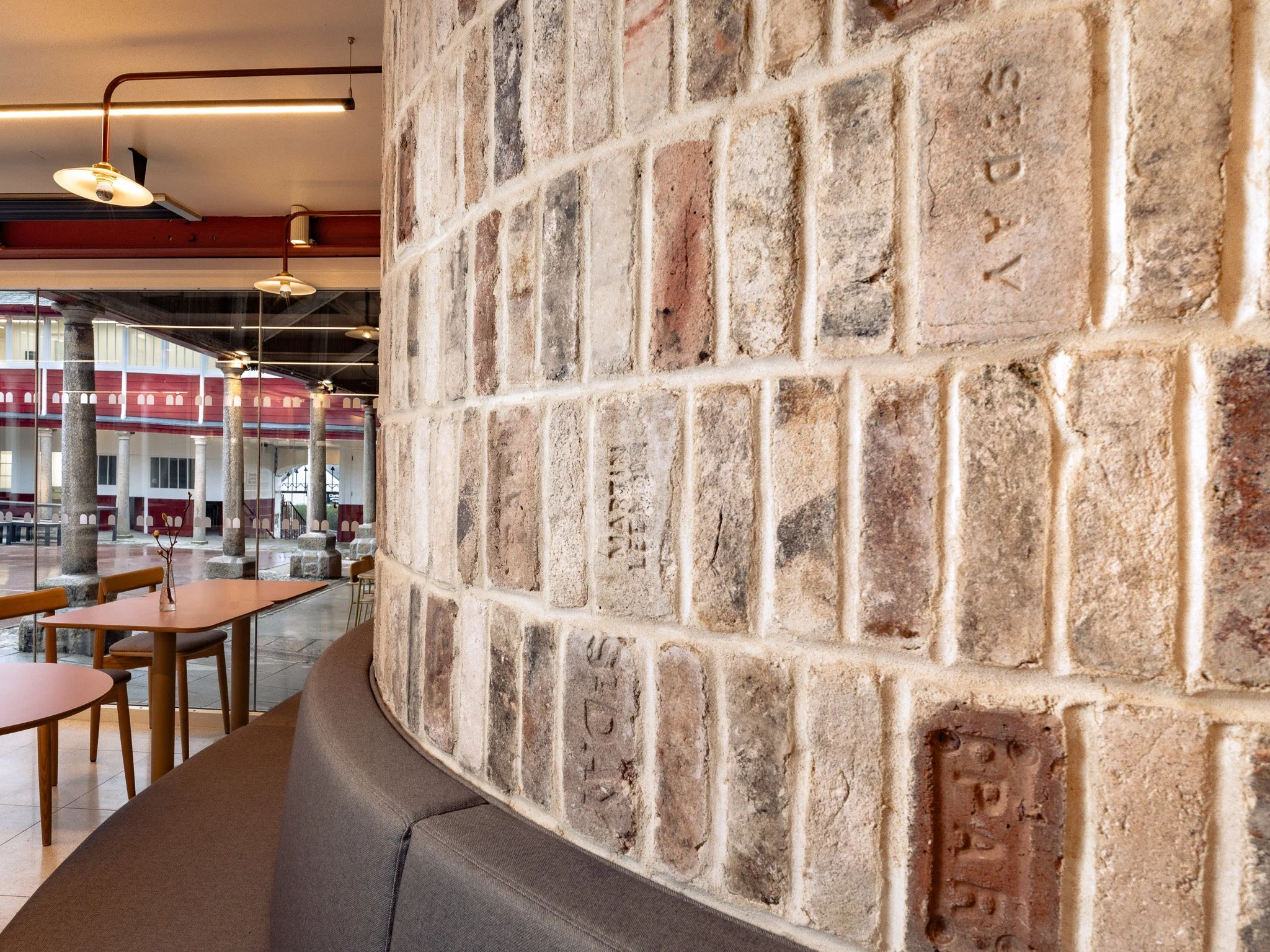
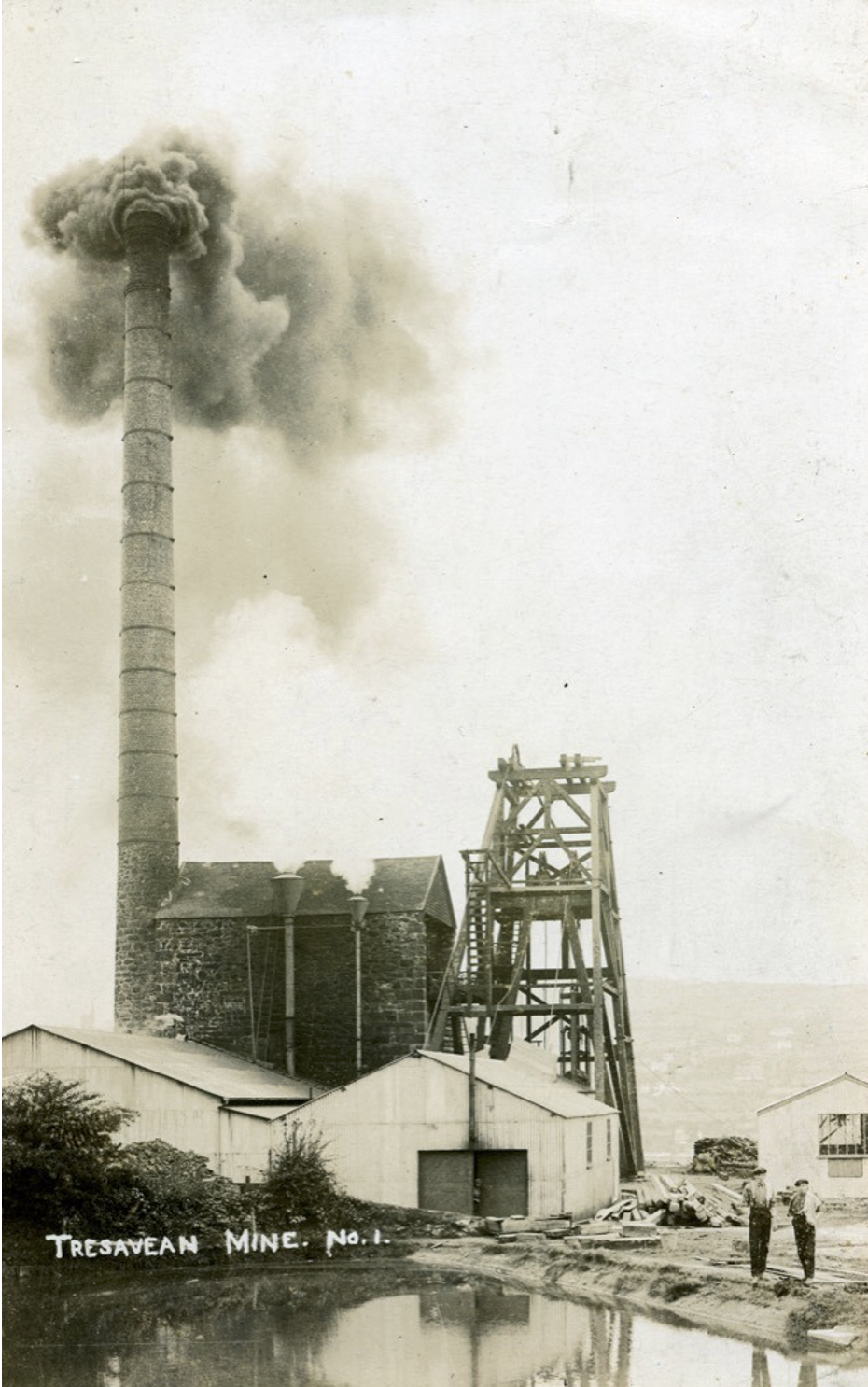
The Snug wall has been constructed using reclaimed bricks from the former Tresavean Mine chimney.
Opened in 1747, Tresavean was one of Cornwall's most important copper mines and, at its peak, featured around 13 engine houses, Cornwall's first man engine, and one of the tallest mine stacks in the county, rising around 150 feet above Harvey's Shaft.
Following the mine's final closure in 1928, the stack was brought down and demolished in 1936 by Walter Langford and his son. Many of the bricks were transported by horse and cart along the old Tresavean tramway to the Langford family's land at Lanner Green, where they remained for decades beneath brambles and blackberry bushes. Generations of the family grew up playing among the brick piles while thousands of bricks lay hidden and largely forgotten.
With the support of local volunteers, the bricks were eventually recovered, carefully sorted and given a new purpose within the Buttermarket restoration. Today, many still bear the names of historic Cornish brickworks, creating a tangible link between Redruth's mining heritage and the Buttermarket's new chapter.
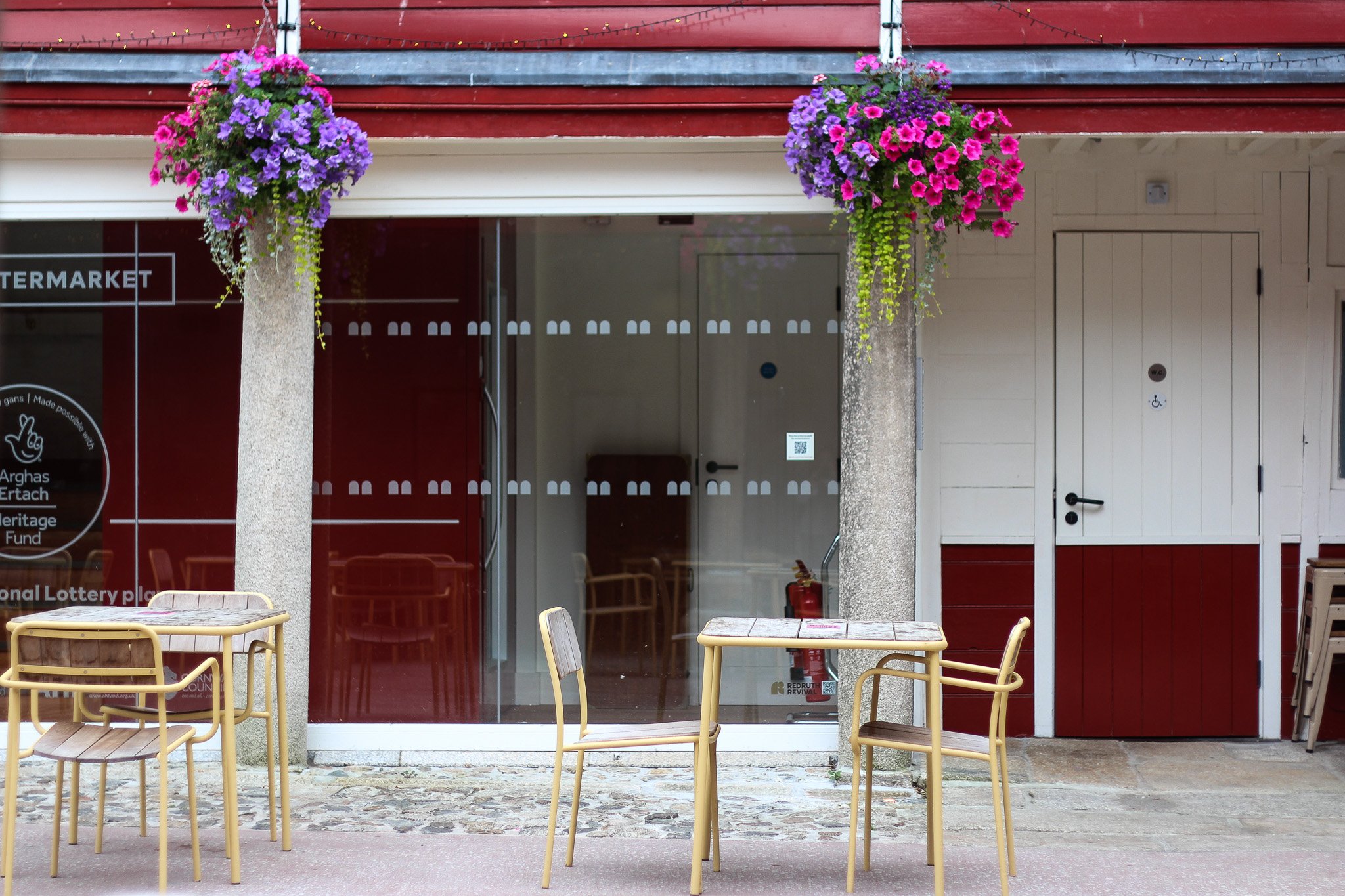
Two granite columns that once formed part of the Buttermarket are believed to have been removed in the late 19th century, possibly sold to the Devenish Brewery for use at Chymbla House in Redruth.
During the restoration, efforts were made to trace and recover the original columns, which are thought by some to remain within the now-derelict building, but their whereabouts could not be confirmed.
To replace them, the project sourced five reclaimed columns from elsewhere in Cornwall. Two granite columns from a former portico in Penzance were carefully adapted for use in the courtyard, while three cast-iron columns sourced in St Keverne were restored and incorporated into the structure supporting the historic archway. One particularly characterful example in The Snug features a substantial timber block fitted above the column head - a practical piece of historic "make do and mend" engineering.
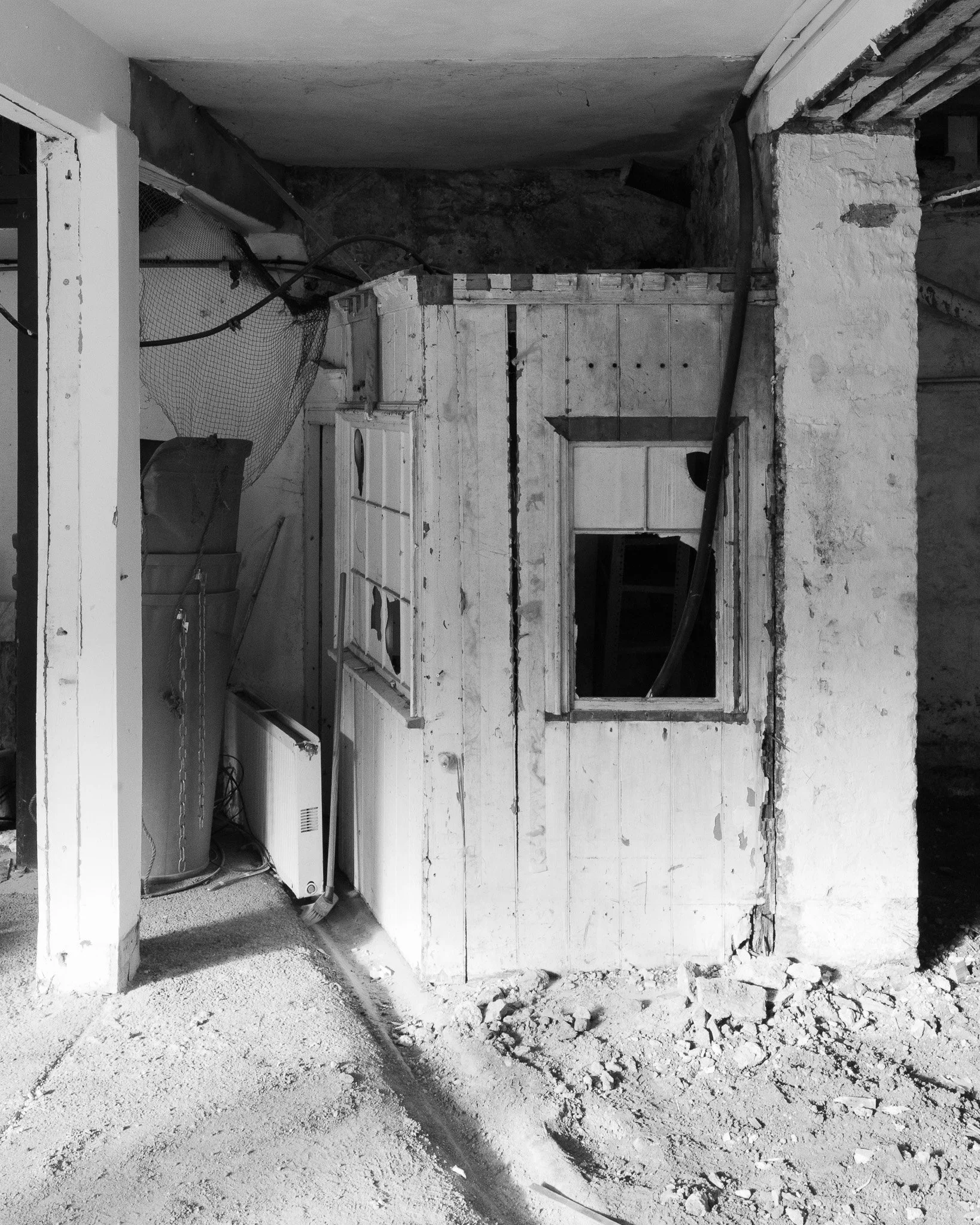
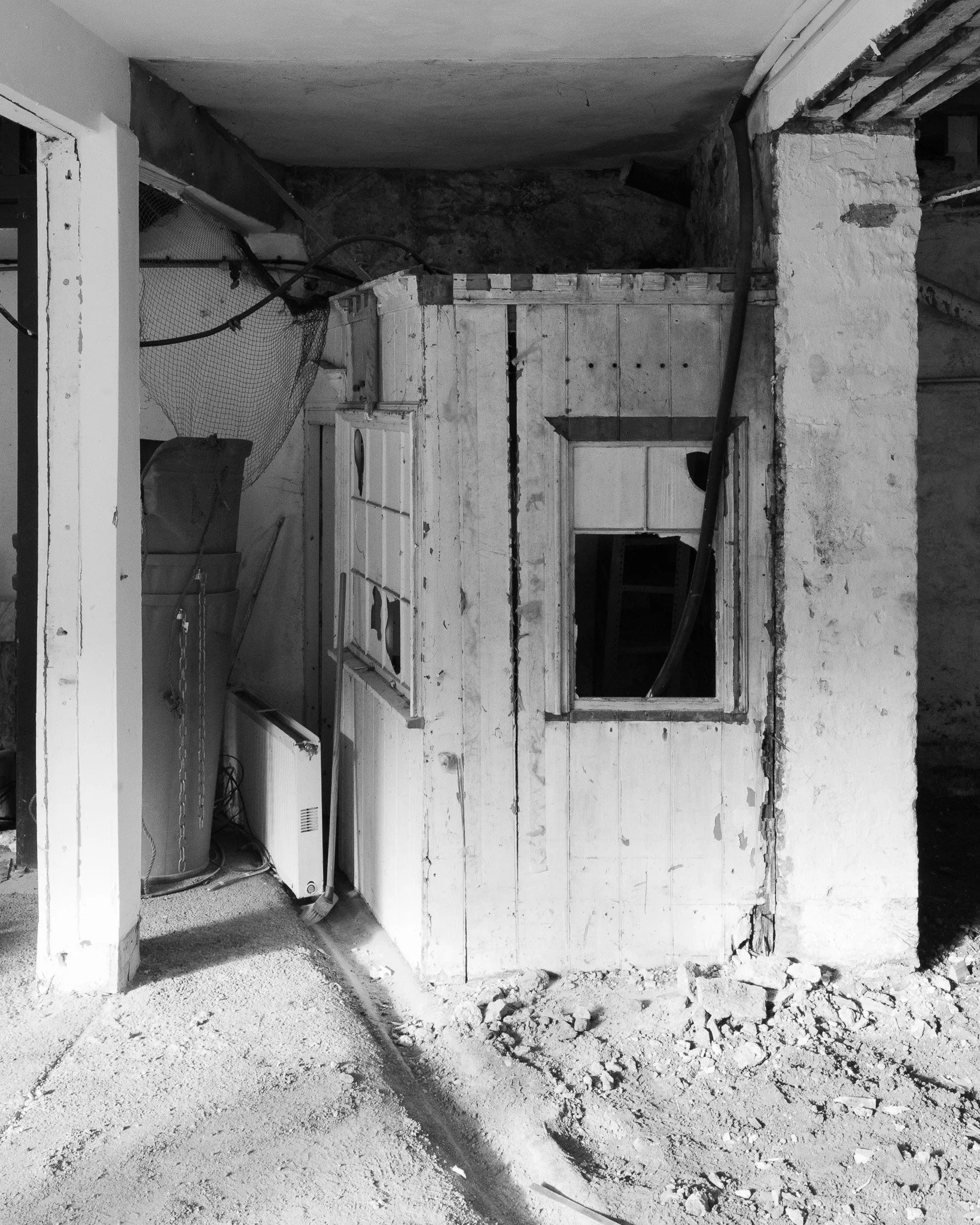
A small projecting window overlooks the Snug, known as the "shopkeeper's window".
Already in place before restoration began, it is believed to have formed part of an old market manager's office or observation point, allowing supervision of activity within the market below. The structure appears to have been assembled from reused materials, possibly including elements salvaged from a nearby demolished property.
Visitors can also spot a large round timber within the covered market roof, which local tradition suggests may once have served as part of a ship's mast
The Buttermarket Project has received the following awards:
RICS UK Awards 2025 | Heritage Award I Shortlisted
Civic Trust Award 2026 | Awarded
AJ Retrofit & Reuse Awards 2025 I Retrofit of the Year Award I Winner
AJ Retrofit & Reuse Awards 2025 | Conservation & Historic (up to £10m) | Winner
Cornish Buildings Awards 2025 | Awarded
Cornish Mining World Heritage Awards 2025 | Best Conservation of an Historic Building I Awarded
Surface Design Awards 2025 | Surface of the Year Exterior | Winner
RIBA South West & Wessex Award 2026 | Awarded
RIBA South West & Wessex Award 2026 | Client of the Year - Redruth Revival CIC | Winner
RIBA South West & Wessex Award 2026 | Project Architect of the Year - Claire Fear, Architectural Thread
Awards
Environmental Sustainability
Sustainability was embedded throughout the project. To reduce embodied carbon, the restoration prioritised reclaimed and recycled materials wherever possible, retaining and repairing existing building fabric to preserve both embodied energy and historic craftsmanship.
The project achieved an upfront embodied carbon figure of 267.41 kg CO₂/m², exceeding LETI's 2030 design targets.
A key innovation was the Food Hall façade, clad in bespoke shingles made from 100% recycled glass. Developed in collaboration with a material scientist and artist, the material reduced embodied carbon by around 80% and fresh water consumption by 99.9% compared with traditional float glass production.
Durable, low-maintenance materials were also selected throughout the interiors, demonstrating how heritage conservation and environmental responsibility can work hand in hand.
To find out more, access Cornwall Council’s Case Study Report of Conservation-led Sustainability Strategy at the Buttermarket here.
Lead Architect: Claire Fear
Project Architect RIBA 4-6: Jen Boddington
Project Architect RIBA 2-3: Jenny Matravers
Heritage Researcher: Vanessa Ruhlig
Project Manager & Quantity Surveyor: Trevor Humphreys Associates
Structural Engineer: PCA Consulting Engineers Mechanical and Electrical Engineers: Method Consulting
Principal Designer: CHPK
Glass Artists: Oseng-Rees Reflection Ltd
Contractors: Jewell Construction